
Prophecy as Policy: Who Gets to be Extreme?
battle_in_front_of_antioch.jpg
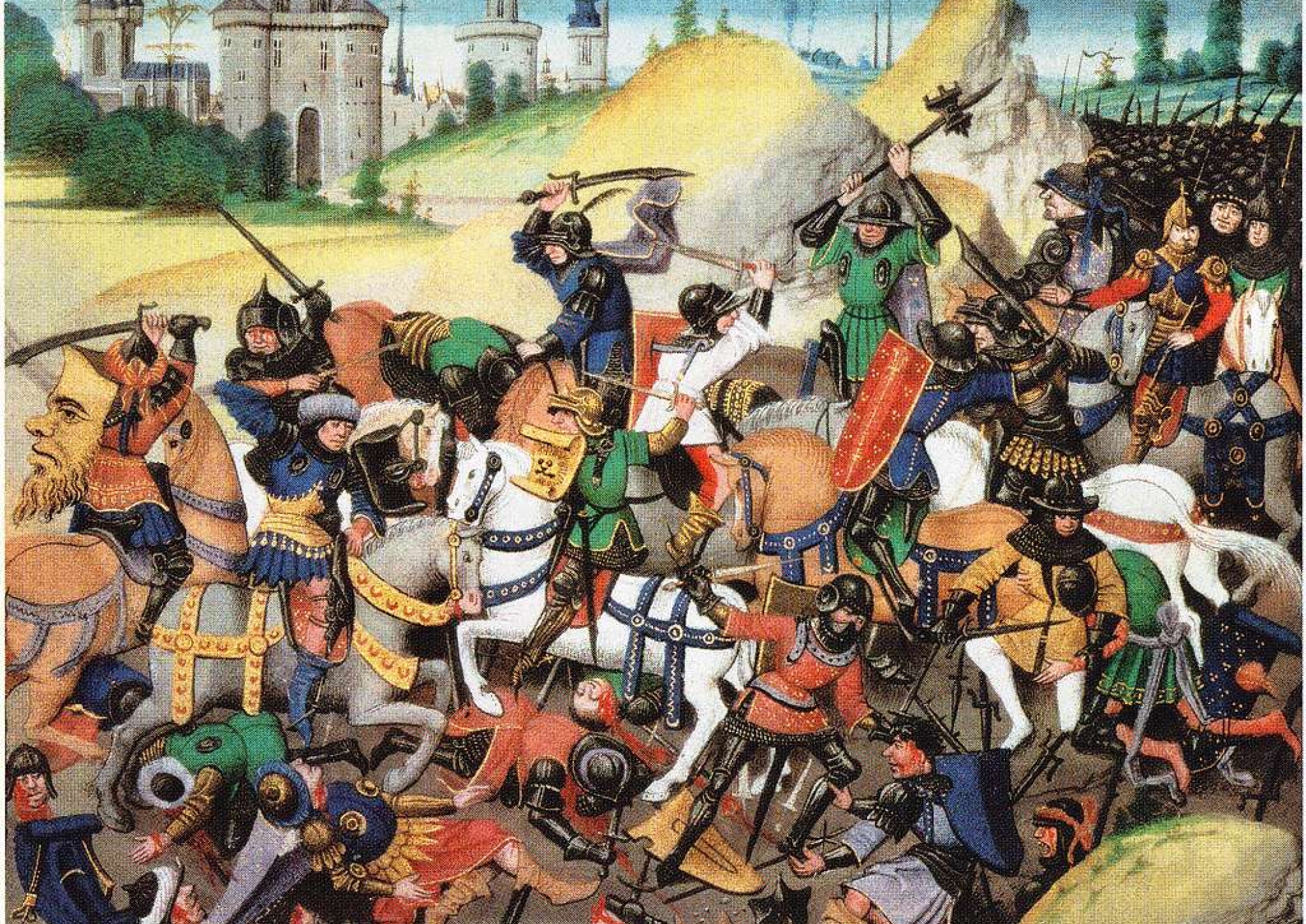
Battle in front of Antioch
The empires of the North are scorching the earth across our region – Gaza destroyed, Lebanon under bombardment, Iran the biggest threat to empire, the publics in Jordan and the GCC collateral damage of collaboration. And they are doing so with explicit religious-prophetic cover. This is US foreign policy, driven by cynical realists who happen to court the evangelical vote. The ideology driving the unconditional arming of "Israel" is, at its highest levels, a millenarian death cult dressed in state power. American cabinet members are genuine believers in End Times prophecy, making real policy from this perspective with real bombs. The doomsday planes are airborne. The E6-B Mercury, the National Airborne Operations Center designed to survive the apocalypse and the control of nuclear weapon submarines, reportedly moves to the region. After killing millions of people from the Global South in the past two decades, they, the true “other” who have the audacity to accuse others of religious extremism, must no longer be trusted in any way, shape, or form.
These are not background figures or fringe voices in the US regime. Mike Johnson, Speaker of the House, has stated openly that the Bible is his policy guide, literally, as a governing document. Mike Pompeo, former Secretary of State, invoked the Book of Esther to frame Trump's presidency as divine intervention, speaking of it in the language of prophecy fulfilled. JD Vance's Catholicism carries the same civilizational logic in a modified way: the idea that the West is a Christian project under existential siege, and that its wars are therefore holy. These men are not cynics performing religion for votes. They are believers. And they are making decisions about our region from within that belief, with the full weight of the American military behind them.
The US Secretary of War, Peter Hegseth, walks into the Pentagon with “Kafir” tattooed on his right arm and the Jerusalem Cross tattooed across his chest – the coat of arms of the Crusader Kingdom, the insignia of Christian armies who came to “reclaim” this land nine centuries ago – and speaks at the podium. He speaks at the podium about Iran’s “prophetic Islamic delusions.” Meanwhile across dozens of US military installations, commanders are telling troops that this war is God’s plan, that Trump has been anointed to light the signal fire for Armageddon. Complaints filed by service members across multiple branches, from multiple bases, document this as the overarching atmosphere. This is the military culture being deployed above our skies. And they call us religious extremists.
In 2018, the United States illegally moved its embassy to al-Quds. What serious foreign policy rationale was ever offered? The evangelical base reads the return of Jerusalem as a prerequisite for the Second Coming. The opening ceremony was blessed by pastors who have called Islam an evil religion.
But the contradiction is that Evangelical Zionism is not pro-Jewish. It is a theology in which Jewish people are mere instruments for the Second Coming, after which they must convert or burn. Netanyahu has always known this and takes the weapons and the votes anyway.
The alliance is based on a shared utility of violence. On one side, you have a pilot, perhaps American, perhaps Israeli, flying an F-35, a weapons system paid for by a government whose senior officials genuinely believe they are accelerating the Rapture. On the other side, people are writing think pieces about whether Hamas’ 2017 charter or Hezbollah’s governance record in Lebanon disqualifies the Palestinian or Lebanese people from solidarity.
No one asks the F-35 pilot if his religion is moderate. No one demands the evangelical congressman prove his fitness for statehood before signing the next weapons transfer. The scrutiny is never applied to the bomber. It is only ever applied to the bombed.
Liberal discourse is addicted to this trap. “Two things can be true,” they say. “I support Palestine but not Hamas,” “Lebanon, but not Hezbollah.” This time-wasting pontification is presented as intellectual rigor, as a refusal to condone violence. But it is, in practice, a form of conditioned self-policing that applies scrutiny exclusively downward. It interrogates the theology of the resistance, the governance of the besieged, the tactics of those facing genocide. It never looks up. It never asks the empire to justify its fundamentally violent existence, only the colonized to justify their resistance, or play the perfect victim. The asymmetry is the argument. Who gets to be extreme without consequence, and who must be moderate to deserve survival? We, too, get to make that claim. We will not remain compliant to this hegemon.
The fragmentation of our struggles into sectarianism did not emerge organically from ancient hatreds. It was exploited, then manufactured, resourced, and maintained. After 2003, the destruction of the Iraqi state created a sectarian vacuum that was actively deepened. Occupation policy handed regional powers a role in the new order; Gulf states were permitted and encouraged to fund one side against another in Syria and Yemen. The contemporary Sunni/Shia divide as a political weapon is not an enduring fact of Islamic history. It is a product of imperial management. It allows the empire to bomb one community while asking its neighbor whether they really share enough in common with the people under the rubble to mourn them. The only honest answer to that question is rejection and disengagement.
The resistance on the ground, Sunni, Shia, Christian, secular, is the only thing physically standing between this imperial project and total erasure. Sowing division between them serves authoritarian and comprador states; collaborators to oppression whose interest is our fragmentation. We cannot trust our own governments to defend us. That is the political reality we are operating from.
Unconditional solidarity is not naivety. It is the only epistemically honest position available to us. It does not mean erasing critique or flattening difference; rather, it is about not making that critique a precondition for opposing genocide. There is no such thing as western-approved resistance. The demand for one is itself a weapon. The resistance in Gaza changed the world. It changed the regional order, exactly as it said it would, and that is no small feat.
The question of who is extreme has been answered. It is answered by the ghosts of Gaza. It is answered by the craters in Beirut and South Lebanon. It is answered by the blood in the streets of Tehran. We refuse to appeal to the imperial West for recognition or to invoke its laws, which were written to protect its weapons.
The resistance does not need our approval. It needs our refusal to be divided; by naming the extremists, and pointing not at the mosque, but at the White House, at the Knesset, at the doomsday plane circling overhead.
The resistance in Lebanon and Palestine is extraordinary. And Iran, whatever one thinks of it, whatever complicated feelings it produces, is the only regional counterpower available to us. That is not an ideological preference but a condition of a reality imposed on us.
The price of dignity is high. It is a cost I would hope most of us are willing to pay, so that our children inherit something better than what was handed to us. There is no alternative except to organize around and support the resistance, unconditionally, until the day that support is no longer necessary. And when that day comes, we can have the conversation we actually want to have: about governance built from the ground up, outside the Sykes-Picot borders that were decided for us, against our will and without our consent.
That conversation is coming, but it is not today’s conversation. Everything else, every “on the one hand, on the other hand,” every liberal attempt to adjudicate the politics of the damned, the wretched of the earth, is a distraction from the operating condition of colonial projects.
They fight a “holy war;” we fight for liberation.