
Hesitant Consciousness and Displaced Antagonism: Containing Public Dissent
everything_is_happening_so_fast_-_merhej.jpg
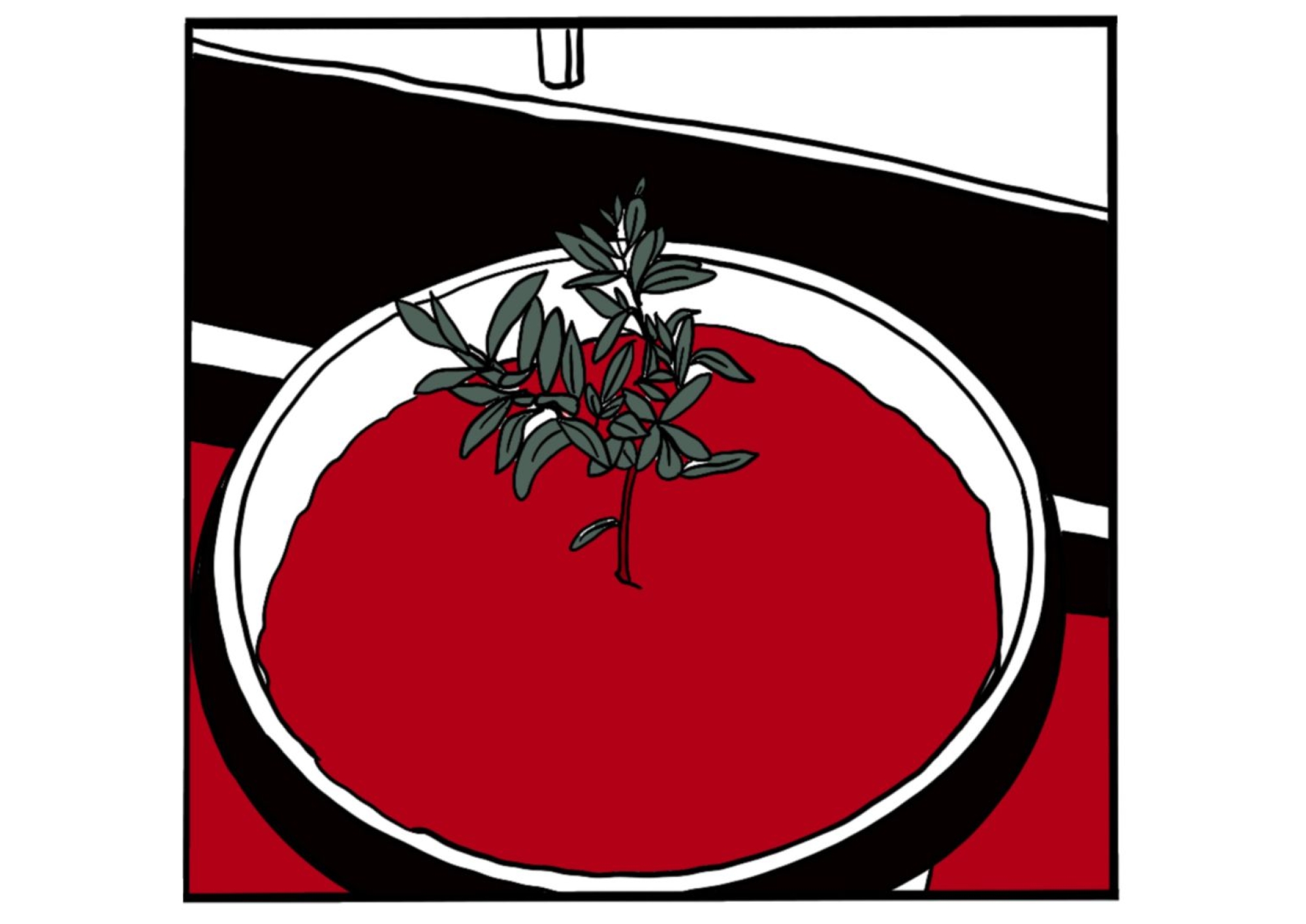
"Everything Is Happening so Fast" by Lena Merhej. Published by Strapazin, Switzerland and Megaphone, Lebanon in 2024.
The expansion of Gaza’s necropolitics of erasure presses upon us – and Us,1 the subjects of Lebanon. It presses relentlessly against our collective myth. Lebanon, as a structure, as a Function, is finished, and set for a not-yet realized transformation marred in neo-Zionism and U.S. market restructuring. The loss of its formational vitality announced itself on October 8, 2023. The infamous architecture of the Deuxième Bureau; the façade of sectarianism and confessionalism concealing the contradictions and rivalries of the regional bourgeois order; the civil war never read through the lens of anti-fascism by its contemporary generation – all of them have reached their historical exhaustion.
Yet, we continue to describe neo-Zionist expansionism in southern Lebanon through the rhetoric of victimhood and the language of sectarianized erasure. We breathe in the assassination of our anti-colonial thinkers of the 1980s and 1990s as we move through streets flooded with every shade of displacement, forgetting that the innocence of the victim is never given. It is chosen.
We can choose to self-flagellate, or we can choose to confront that we are not innocent. I believe Palestinians have taught us that the latter carries not only greater dignity in its practice, but also greater hope for a successful insurgent horizon in its imaginaries.
We are ruled by an Epistemic Iron Dome, one that traps Lebanon’s people/Civil Society in an impasse before the unfolding tragedies of the region. We are caught between warring regional imperialisms and the contradictions of a fractured bourgeois order. In that sense, the dome wins, cold and unyielding. And yet, even in this graveyard, from within the ashes, a ghostly resolve endures, undisturbed. It rises in fragments, bandanas and scarves fluttering like signals across the smoke – a reminder that refusal, even when buried as strategies fall, even when individualized, cantonized, and atomized, cannot be fully erased.
Perhaps the war that Gaza has now thrust upon the world is not an isolated convulsion, but the belated afterlife of a Palestinian revolutionary project whose prospects were repeatedly extinguished through a series of decisive defeats. The first came with Black September in Jordan (1970-71), when King Hussein’s regime crushed the Palestine Liberation Organization (PLO) and dismantled the Palestinian guerrilla presence in the kingdom. The second occurred in Lebanon in 1982, with the forced evacuation of the PLO from Beirut under international guarantees, followed almost immediately by the Sabra and Shatila massacre. The aftermath extended beyond the massacre itself: Palestinian, leftist, and Lebanese communist fighters who had adhered to the ceasefire were effectively betrayed by the arrangements that followed, finding themselves exposed to mass killings and disarmament while the guarantees were rapidly broken. At the same time, Palestinian intellectual and institutional infrastructure – including the Palestinian Research Center – was looted and dispersed. A third and often overlooked chapter unfolded during the War of the Camps (1985-88), when Palestinian refugee camps endured prolonged siege, massacres, and starvation at the hands of forces aligned with the Islamic Republic of Iran and the Baath regime. This came in the broader context of Tehran’s efforts to export its revolutionary model and partake in the political landscape of a post-palestinian Liberation Front in Lebanon. Seen from this perspective, the present war emerges less as a rupture than as the long-delayed return of unresolved political struggles that were successively suppressed in Amman, Beirut, Damascus, and the Palestinian camps of Lebanon. In its first breath, that revolution sought to be a genuinely popular one – a movement that would exceed the rising bourgeois formations of its time and the narrow functions of the nation-state, before expanding across the region.2 Its wager was audacious: to reimagine those very states, which would later come to govern their peoples, so that they might sustain a form of life and administration capable of confronting the colonial presence, without allowing the quotidian hardships of class exploitation to eclipse the larger, more decisive impasse of liberation.
Today, something is stirring again – a return, but with a different horizon. The war imposed upon the region in the wake of Gaza’s ultimate refusal appears less like the resurgence of a popular revolution, and more like a conflict that follows the logic of a regional bourgeois order. And yet, somewhere in the background, there endures the ghost of that earlier revolution which once dreamed of belonging to the people. But as our Kanafani would say, “all that is beside the point” (2000).
Displaced Antagonism
Much of the contemporary critical literature on political action under neoliberalism converges on familiar diagnoses: political passivity, the depoliticizing effects of the NGO-industrial complex, or the substitution of material struggle for symbolic performative activism. While these analyses capture real tendencies, they often remain descriptive, naming outcomes rather than theorizing the mechanisms through which politically conscious actors are repeatedly mobilized into forms of action that neutralize their own efficacy. The present intervention proceeds from a different premise. Rather than diagnosing inertia or rehearsing critiques of symbolic politics, it seeks to theorize a mechanism of containment – one that renders antagonism visible, morally charged, and affectively intense, while systematically redirecting it away from sustained material confrontation.
I argue that this mechanism operates through what can be termed displaced antagonism. Displaced antagonism is a structural and strategic condition of disorientation – akin to a state of political lostness (تيه) – in which struggle is enacted, yet spatially and temporally routed so as to avoid durable friction with the material infrastructures and social relations that reproduce domination. Displaced antagonism presupposes awareness rather than ignorance. It thrives precisely where critique is articulate, ethically compelling, and publicly legible. What it excludes is not speech, but confrontation – between bodies and the material foundations of power.
This alienation manifests itself in an inability to recognize one’s own position within the social and economic relations that sustain the very structures being opposed. Thus, a marketplace that functions as a vital economic artery for a city may come to regard the sale of Palestinian merchandise – intended to discomfort pro-Israeli or anti-Palestinian tourists – as a significant act of resistance, while remaining unable to perceive the far greater leverage it possesses through its capacity to disrupt economic circulation itself. The issue is not the symbolic gesture as such, but the displacement of attention from forms of action capable of altering the material conditions under which Zionist political, military, and technological networks operate. A sustained strike, collectively organized and negotiated against authorities that facilitate the circulation, procurement, or deployment of military technologies, would potentially exert far greater pressure on the reproduction of these structures than symbolic market signaling alone.
A similar dynamic can be observed within segments of the organized left, where cadres are sometimes taught that political activity must remain confined to forms of protest that avoid substantive confrontation with workers employed in military, transport, logistics, metalworking, or other strategic industrial sectors. Such restraint is frequently justified in the name of building a future “critical mass.” Yet, in societies where large sections of the working class occupy relatively privileged positions within global hierarchies of accumulation – what some Marxist traditions have termed a labour aristocracy – the prospects for incorporating these strata into a broad anti-war bloc may be considerably more limited than such strategies presume. The result is that organizational energies become increasingly redirected toward symbolic, discursive, and electoral activity, while the question of how to interrupt the material reproduction of war, imperialism, and settler-colonial domination is deferred indefinitely. Political practice thus risks becoming performative rather than transformative, reproducing its own rituals of dissent while leaving intact the structures it seeks to contest.
This logic is particularly characteristic of reformist currents that mistake moral affirmation for strategic intervention. In the Arab context, it bears a striking resemblance to what Mahdi Amel termed the “Islamised bourgeois trend,” a political tendency that translates social antagonisms into moral, cultural, and ideological registers while leaving largely untouched the relations of production, dependency, and class power through which domination is reproduced (Amel 2021, 111-119). Resistance is thereby displaced from the terrain of material confrontation to that of ethical performance, symbolic affirmation, charitable action, consumer choices, and carefully managed protest. What emerges is not an absence of opposition but a form of opposition structurally incapable of transforming the balance of forces. The more political action is detached from the strategic locations through which military power, capital accumulation, and imperial influence are reproduced, the more it becomes confined to a cycle of symbolic self-representation. What appears radical at the level of discourse consequently coexists with a practical incapacity to mobilize the forms of collective power capable of recalibrating the market, disrupting the logistical infrastructures of war, and altering the rules according to which domination itself is organized.
What is perhaps most consequential in the legacy of the Islamised bourgeois trend is that, precisely because it does not seek to overturn the rules governing the existing marketplace, state form, and regional order, it remains confined within the horizon of the present. As a result, it becomes incapable of grasping its own future-oriented potentials and instead grows increasingly invested in the reproduction of the very conditions that sustain its adversaries’ room for maneuver. The problem is not merely strategic moderation but a deeper structural attachment to the institutions, circuits of accumulation, and forms of political authority through which dependency itself is reproduced.
The trajectory of Hizbullah offers an illustrative example. Rather than positioning itself exclusively as a force seeking to transform the political and economic architecture of the Lebanese state, it progressively entrenched itself within that architecture, insisting on participation in governmental authority and cultivating social alliances tied to bourgeois accumulation. This process coincided with the emergence of economic networks linked to commercial and extractive activities extending into parts of the African continent, as well as participation in what Hicham Safieddine has described as the practice of “banking on the state” – the use of state institutions and financial mechanisms as sites of accumulation and political reproduction (Safieddine 2019). Yet, this incorporation into existing structures unfolded alongside continued dependence on financial, military, and political support originating from a regional power whose geographical scale, ideological influence, and material capacities vastly exceeded those of its Lebanese allies. Consequently, the relationship could never be one between genuinely equal negotiating partners. The pursuit of autonomy through incorporation into existing structures thus risked producing the opposite outcome: the reproduction of new forms of dependency and subservience. In this sense, the Islamised bourgeois trend reveals a paradox central to reformist politics more generally. By seeking accommodation within prevailing structures rather than their transformation, it becomes increasingly invested in reproducing the material conditions of its own subordination, thereby foreclosing the emergence of alternative political futures.
The limitations of the Islamised bourgeois trend are not confined to its accommodation with existing markets and state institutions. They also reveal a deeper captivity to what Heba Raouf Ezzat has described as the political imaginary of the state (2013). Rather than constituting an alternative to the modern nation-state, large segments of contemporary political Islam have come to reproduce its categories, aspirations, and modes of action. The state increasingly appears not as one historical form among others, but as the unquestioned horizon within which political possibility itself is conceived. In this sense, the critique advanced by Mahdi Amel and the questions raised by Heba Raouf Ezzat converge. What Amel identifies as the Islamised bourgeois trend can also be understood as a political formation imprisoned within the state imaginary: unable to imagine power except through sovereignty, government, institutional participation, and territorial control.
This confinement has had profound strategic consequences. By remaining attached to the state as the primary terrain of politics, political Islam frequently failed to grasp the transformation of power occurring under neoliberalism and contemporary Zionism. While its strategic calculations remained largely organized around territory, military deterrence, governmental participation, and diplomatic recognition, the structures it confronted increasingly operated through technological infrastructures, financial networks, surveillance systems, logistical corridors, data extraction, and biopolitical forms of governance extending beyond the territorial state. The result was not merely a tactical miscalculation but an impoverishment of political imagination itself. Captive to the present institutional order, political Islam often proved incapable of recognizing the future forms through which domination was being reorganized and therefore incapable of formulating modes of resistance adequate to them.
The Legacy of the Communist Resistance in Lebanon: A Clarification
Amel’s discussion of the colonial mode of production (2021, 70-77; Bou Ali 2020) offers a productive point of departure for understanding Lebanon’s contemporary predicament, even though the regional political economy has been fundamentally reconfigured since his writings in the 70s and 80s. His insistence that the struggle is not reduced to colonizer versus colonized because class contradictions persist within the colonized social formation (ibid.) is particularly illuminating today. Lebanon is not a mere anti-colonial frontier; it is situated at the intersection of two overlapping contradictions: first is the ongoing neo-Zionist project of territorial restructuring, understood here as the Israeli drive to reshape the demographic and geographic architecture of historic Palestine through settlement expansion, annexation, and the systematic fragmentation of contiguous Palestinian space. Second is a regional bourgeois war over the redistribution of energy corridors, logistical infrastructures, financial functions, and regional labour across the Eastern Mediterranean, the Gulf, Iraq, Iran, and post-Baath Syria. The first operates through territorial acquisition and demographic engineering, while the second functions through the competitive reallocation of economic assets and labour flows. Yet, they converge in their shared effect of reducing Lebanon to a space to be managed rather than a site of autonomous political agency. This convergence compels a qualitative revision of Amel’s framework, to account for the ways in which sectarianism has been internationalized as a mode of counterinsurgent governance.
Amel warned against subordinating class antagonism to the ideological unity of national liberation (2021, 73-77). The persistence of Lebanon’s sectarian configuration, and its defense in the name of anti-imperialist resistance, have transformed the country into an object of regional bargaining rather than a potential site of rupture. Here, I understand rupture in the Sewellian sense (2005): the disruption of durable structures through which historical trajectories are reproduced. Lebanon’s inability to produce such a rupture stems from the repeated displacement of class antagonism into sectarian representation. In Anna Tsing’s appropriation of the Braudelian longue durée (2015), seemingly transient events are revealed as embedded within deeper structures of persistence. In the same vein, sectarianism endures as a historical infrastructure through which class conflict is continually absorbed into communal belonging. The consequence has been the foreclosure of the social transformation that Amel regarded as inseparable from genuine national liberation (2021, 73-77). It has also prevented Lebanon from fully joining the broader revolutionary horizon that Palestinian insurgency attempted to construct during the 1970s and 1980s, and now through Toufan Al Aqsa (طوفان الاقصى), which I refer to as a geopolitical, temporal rupture and a project to redefine prison.
This reading also clarifies the paradox identified in Amel’s discussion of the Islamised bourgeois trend (2021, 114-119). Lebanon’s willingness to enter into negotiations while parts of its territory remain occupied – and entire border villages such as Mhaibib, Qaouzah, and several others along the Blue Line have been erased – cannot simply be interpreted as diplomatic pragmatism or state weakness. Rather, it reflects Lebanon’s repositioning within an emerging regional division of labour. Stabilization, reconstruction, energy governance, logistics, and labour mobility have themselves become objects of geopolitical competition. As regional civil society infrastructures are recalibrated through transformations in Syria and shifting Gulf-Iran dynamics, Lebanon has sought to renegotiate its place within new architectures of international stabilization, exemplified by programmes such as the UNDP’s Stabilization Facility for Lebanon and various EU-funded governance initiatives. Here, Amel’s distinction between ideological opposition to imperialism and the transformation of underlying class structures (ibid.) reasserts itself with particular force. Anti-imperialist discourse may persist, yet the underlying political economy remains integrated into regional and international circuits of capitalist accumulation.
It is precisely at this point that Amel’s analysis requires qualitative revision rather than simple extension. His account of the sectarian state (2021, 84-89) demonstrates that sectarianism constitutes a political form of bourgeois domination rather than an expression of primordial communal identities. Yet, the contemporary Lebanese impasse suggests a change in kind, not merely degree: sectarianism no longer operates solely as the political form through which domestic bourgeois fractions organize consent and reproduce class power. It has been re-functionalized as the institutional interface through which international stabilization3 regimes govern crises.
Consequently, clientelism must be theorized anew as a mode of international governance. Rather than understanding it exclusively as an exchange between sectarian leaders and their constituencies, clientelism now extends into an international political economy of subsidized civil society, NGOs, policy consultancies, humanitarian organizations, and stabilization programmes. These institutions progressively assume social functions once associated with political parties, trade unions, and working-class organizations. At the same time, they fragment social demands into administratively manageable communities. The result is not simply the depoliticization of class but its internationalized management.
The theoretical implication is that sectarianism is no longer merely the political form of bourgeois rule, as Amel argued (ibid.). It has become the principal institutional mechanism through which regional and global capitalism stabilizes crises at its peripheries, and arguably from within. This re-functionalization has occurred through three interconnected mechanisms. First, the proliferation of internationally funded NGOs and stabilization programmes has progressively assumed social functions (welfare provision, conflict mediation, service delivery…) once associated with domestic political parties and trade unions. Second, donor conditionality has incentivized sectarian representation by channelling funds through sectarian-affiliated organizations rather than cross-sectarian civil society – a project attempted and tabooed in pre-civil war Lebanon by the communist party and the PLO. Third, the international division of labour in humanitarian governance has produced a class of intermediaries (development professionals, consultants, policy experts…) whose careers depend upon the continued demand for stabilization expertise. These mechanisms collectively transform sectarianism from a domestic political form into a transnational infrastructure of governance.
A transnational labour aristocracy of development professionals, governance experts, consultants, and international intermediaries has emerged as the primary mediator of this process. Following the classical Marxist usage, the term “labour aristocracy” conventionally designates a privileged sector of the working class in imperial centres that benefits from superprofits extracted from the periphery. Here, however, I extend the term to designate a transnational stratum whose material interests are aligned not with productive labour but with the reproduction of crisis management as a mode of governance. This stratum’s livelihoods depend upon the continued demand for stabilization expertise, humanitarian intervention, and post-conflict reconstruction. This is not to suggest that development professionals consciously conspire to reproduce sectarianism. Rather, their structural position defined by funding streams, project cycles, and career trajectories produces this effect regardless of intent. Their position depends upon the continued reproduction of stabilization infrastructures whose legitimacy rests upon the persistence of sectarian fragmentation. Class domination is therefore no longer reproduced only by Lebanese bourgeois fractions. Exemplified by the revolving door between domestic NGOs, policy consultancies such as the International Crisis Group, and donor-state bureaucracies, it is reproduced through transnational assemblages that transform class conflict into governable communal difference.
Amel’s framework diagnosed the limits of anti-imperialist discourse (2021, 114-119), but it could not have anticipated the internationalization of sectarianism as a mode of governance. I argue that sectarianism is no longer a simple obstacle to national liberation, but a structural requirement for contemporary labour stabilization and the banalization of anti-imperialism through its bourgeoisification. Amel demonstrated that replacing one sectarian ruling bloc with another could never constitute liberation (2021, 84-98). Today, the central political question has shifted from who governs to what governs: the infrastructures through which sectarianism, regional capitalism, humanitarian governance, and international stabilization reproduce one another. The implication for political practice is that opposition to sectarianism cannot be confined to the national frame; it must also contest the international division of labour that makes sectarian governance profitable and administratively convenient. It is in this space where class and national consciousness is neutralized and rendered benign despite the discursive forts surrounding it.
Hesitant Consciousness: from the Lebanese Local to the Gazan Global
Displaced antagonism relies on what I will describe as hesitant consciousness. Hesitant consciousness is the space between consciousness-in-itself and consciousness-for-itself – that is, between a descriptive recognition of social conditions and a historical consciousness capable of transforming that recognition into revolutionary praxis. It can name relations of exploitation and theorize rebellion against their political and economic forms, yet it remains unable to move from ideological critique to sustained material engagement with the conditions that produce these relations. The result is not apathy, but a persistent gap between knowing and acting, between antagonism articulated and antagonism enforced. The conundrum of this state is that in the face of a true class rupture – like the moment of Toufan Al-Aqsa – it finds itself incapable of collective motion or mobilization. The warring bourgeois powers that govern daily subsistence are stumbling into their own contradictions: the Islamic Revolutionary Guard Corps (IRCG) as a post-revolution clientelist and industrial structure, the Trump administration as a self-proclaimed revisionist movement against hyperfinancialization.4 In reaction to their own internal imbalances, a bombing disrupts the Iran-Israel/Gulf negotiation table; a military escalation reshuffles regional alignments; rival bourgeois factions violently renegotiate the terms of accumulation. This elite fragmentation unfolds within a hegemonic market space – a regional order structured by capitalist integration – whose internal contradictions increasingly generate pressures that demand new forms of rule. Yet, the popular basis of society is not constituted through class identities forged in production. The people are mobilized not as workers but as subjects of the warring bourgeoisies, their class position obscured by sectarian, nationalist, and geopolitical interpellation. What appears as political turbulence is therefore not the return of the repressed popular classes but the symptom of elite fracture, revealing the instability of bourgeois rule even in the absence of a popular challenge from below. Ideology falls before the material lords of the market.
A hesitant class consciousness is one in which ethical outrage is displaced into forms of action that reproduce, rather than challenge, the mechanisms of genocidal reproduction. Performative solidarities – such as symbolic protests, Hizbullah and Iran’s wars of limited support (Harb Al Isnad), humanitarian flotillas, limited campaigns, or state-sanctioned demonstrations – mobilize human, financial, and affective resources while carefully avoiding confrontation with the infrastructures of power responsible for elimination.5 Practices such as civil obedience within complicit nation-states, the role of labour unions and associations in enacting political refusal through collective, systematized, and long-term action in the name of geopolitical stability, or humanitarian corridors that leave military and accumulation structures intact, exemplify this dynamic. What accumulates here is not resistance but an economy of moral performance, one that stabilizes the very order it claims to oppose.
In this sense, hesitant consciousness becomes structurally analogous to a class “in itself” rather than “for itself,” or to a lumpenized social mass whose expressions of refusal remain trapped within the conditions of its own exploitation. Its acts of dissent paradoxically reinforce the infrastructures of domination they seek to negate. This form of consciousness thus delineates the thin boundary between socially accepted solidarities and those unaccepted practices of refusal that directly disobey the political, economic, and moral infrastructures sustaining genocidal violence.6
This impasse generates a structural fissure within social blocs, particularly among working-class and elite strata. On one side, a minority seeks to translate consciousness into action, attempting to move discourse toward practices that challenge the underlying structures of production and state power. On the other hand, a majority manages the contradiction between the radicalism of its language and the reluctance to mobilize resources or even organize them for a possible material disruption, thus legitimizing its critical posture. This management often takes the form of displaced antagonism: it redirects struggle away from internal relations of exploitation, and toward externalized representations of the enemy. In other words, it releases revolutionary energy without undermining the foundations of the existing order. Among colonized and exploited populations, the organization of social and administrative life has been subordinated to the hegemonic system. This subordination produces a reluctance to embrace resistance movements that might transform the market order, undermine merchant power, and disrupt the economy under conditions of siege.
Hesitant consciousness, then, is not a rupture with relations of exploitation, but a distorted or perhaps disoriented form of awareness. It sustains internal coherence as a product of the class relation itself, generating narratives of engagement that remain structurally bound to power. Actors operating within this register often occupy vested and also explicit positions inside the prevailing social order (e.g. a resistance movement that is proud of its position in the government). Their critical practice thus tends to protect these positions, structurally and sometimes intentionally (e.g. clientelist structures within the Shi’i civil society that rely on Iranian, African-extracted and EU-facilitated7 money). The consequence is a condition of historical stagnation in which dialectical movement is stuck at the level of description, denunciation, and symbolic protest.
Solidarity as Escapism
Within the Marxist tradition of Poverty of Philosophy (1847), hesitant consciousness may be understood as one historical configuration of what Marx and Engels termed false consciousness. I propose looking at the concept as a mode of awareness that apprehends social contradictions in their surface manifestations while failing to penetrate the material structures that generate them. Relations of exploitation are partially recognized, yet contained within an ideological horizon that prevents critique from becoming a material force. Criticism and performative confrontation themselves are thus incorporated into the reproduction of the system. Hesitant consciousness articulates contradiction from within its conditions, not from a standpoint capable of or interested in overcoming them as a totality – for the fight against totality might actually jeopardize its own existence and persistence.
Discursive opposition does not rupture the sectarian order; it consolidates it by reproducing the very political grammar through which citizenship is constituted, and that absorbs resistance itself. Rather than constituting an insurgent rupture, it is rearticulated as a constitutive pillar of the state, encapsulated in Hizbullah’s formula of shaʿb-jaysh-muqāwama (“the army, the people, and the resistance”) raised on public banners throughout Lebanon for years. The political convergence between the Aounist project and the Shi’i coalition merely extended this logic, reaffirming resistance not as an external challenge to the Lebanese state but as one of the mechanisms through which its sectarian order was stabilized. Victory against Zionism, however, necessitates the liquidation of the sectarian order. Likewise, the reformulation of Israel’s security doctrine in its northern frontier necessitates abandoning the framework of UN Security Council Resolution 1701.
The cantonization of confrontation, which determines whose confrontation it is and whose resistance it is through the triad of people-army-resistance produced a continuous temporal and geographic buffer zone. Palestinians of the Lebanese South no longer had the possibility of moving offensively, while Lebanese citizens were kept in a permanently defensive position, retreating at every heightened confrontation. The struggle therefore necessitates the obliteration of the citizen/Palestinian divide. Victory, in turn, necessitates the liquidation of the sectarianized phenomenon of resistance. In this paradoxical sense, the end of Hizbullah as a sectarian formation would bring about that of Israel.
This formulation finds further theoretical elaboration in Georg Lukács’ analysis of reification (1923). Under reified conditions,8 social subjects are severed from the historical totality of which they are part, and praxis is fragmented into discrete, episodic acts lacking dialectical mediation between subject and object, consciousness and structure. Critical discourse becomes a self-referential symbolic practice, detached from its material conditions, while revolutionary efficacy is displaced by moral or rhetorical forms of protest that leave relations of production intact. Hesitant consciousness thus appears as a crisis-ridden awareness: linguistically sophisticated, ethically animated, yet deprived of the perspective of totality required to overcome reification and engage consciously in class struggle.
From a Gramscian perspective (Laclau and Mouffe 1985, based on Gramsci 1971), this condition reflects a failure to dismantle hegemony, specifically because it operates through cultural and institutional forms rather than through coercion alone. Dominant classes, including intellectuals of petit bourgeois dispositions and institutional affiliations (university students and staff, paralegals, NGOs, think tanks…), demonstrate a capacity to absorb elements of critical discourse, recycle them, and utilize them sometimes in acts of condemnation. Paradoxically, it is precisely this utilization that secures the flexibility necessary for the system’s continuity. We are citizens, and within this political order the citizen is always a sectarian subject. To refuse sectarian practice is, in effect, to refuse the normative conditions of citizenship itself. Beyond this threshold, only two positions remain intelligible: incorporation into the clientelist infrastructure or construction as an enemy of the state. The persistence of hesitant consciousness signals an inability to construct a counter-hegemony – that is, to produce a cultural-political project capable of unifying economic demands with symbolic forms and strategic orientations, into a coherent resistance bloc.
These same dynamics are visible in contemporary political practice around the world. Segments of the professional and cultural classes may articulate forceful critiques of neoliberal capitalism, condemn imperial violence, and publicly align with the Palestinian cause, while remaining structurally embedded within NGO or humanitarian frameworks dependent on the same political-economic order they contest. In such cases, critique is not insincere; it is institutionally stabilized. Antagonism circulates discursively while its material consequences are contained.
Highly visible interventions such as the flotilla solidarity fleet further illustrate the logic of displaced antagonism. Substantial moral, financial, and human resources are mobilized to stage a confrontation with the blockade of Gaza. Yet, the action remains strategically detached from sites where sustained material disruption could have exerted pressure on imperial infrastructures. No attempt has been made to intervene in logistical chokepoints such as the Strait of Gibraltar, nor was the initiative embedded in labour formations capable of enforcing prolonged disruption through port shutdowns or indefinite strikes. Bodies moved toward the scene of violence, but power itself encountered no enduring friction. Antagonism happened but its targeting was displaced, producing the appearance of confrontation without confrontation’s material persistence.
Waiting for the Vanguardist Godot
At the same time, certain practices complicate any blanket characterization of contemporary struggle as merely hesitant or symbolic. Recent hunger strikes undertaken in the United Kingdom by imprisoned members of Palestine Action constitute one such case. While the organization’s non-centralized structure and episodic confrontations remain politically fragile, the hunger strikes cannot be analytically reduced to inert symbolism or subsumed uncritically under hesitant consciousness.
Hunger strikes draw on a long lineage of embodied resistance within carceral regimes. In the present context, however, they are not just moral appeals; they reconfigure the political location of antagonism within the European prison itself. This reconfiguration exposes the disciplining force of the state, unleashed on the bodies of its own citizens. Citizen consciousness of imperial states often perceive imperial violence as an external humanitarian issue, and acts like hunger strikes reveal it to be a domestic political contradiction. Foreign policy ceases to appear as an abstract domain of distant decision-making and is reconstituted as a material relation enforced through sovereign institutions at home.
Where flotillas and marches reinforce the outwardness of the cause – reproducing a division between a metropolitan subject and a distant site of violence, the hunger strike collapses this distance. Antagonism is no longer displaced outwards but re-sited within the metropole itself. The striking body becomes the site where colonial violence is symbolically and materially returned to the political field that authorizes it.
Here, the prison emerges not merely as a space of repression but as a nodal site where sovereignty, discipline, and class domination converge. Although such acts do not resolve the problem of organizational continuity or strategic scaling, they nonetheless interrupt the logic of displacement. Antagonism is no longer performed at a distance; it is enforced through the material vulnerability of the political body itself. And most importantly, the European citizen reclaims themself a political agent within and against their own metropolitan colonial ordering – hinting at the long-assassinated tradition of “bringing the war home.”
Consequently, hesitant consciousness should be understood as an unresolved dialectical moment within the class struggle. It may be reabsorbed into hegemonic mechanisms as a renewed form of false consciousness, updated to accommodate critique without disruption.
The central political problem, then, is neither the absence of consciousness nor the excess of symbolism, but the persistent displacement of antagonism away from sites where it could become structurally consequential. The task posed by the present conjuncture is not simply to raise awareness, but to forge organizational and strategic forms capable of converting articulated critique into sustained material confrontation, thereby collapsing the hesitancy in the hesitant consciousness and transforming it into an active force that refuses the tailored safety of society’s economic base.
Now that the bourgeoisie has taken centre stage, all analysis falls on deaf ears. The betrayal has already occurred, and the war of corpses, the war of regimes, has begun. How do we prepare for the coming continuum of war and development when reconstruction programmes persist? They refurbish market regimes, rearticulate clientelist relations, reshape urban structures, and redraw borders, all while maintaining some clientelist actors and eliminating others. In other words, they advance particular geopolitical interests within the Iran-Israel war and the hyperfinancialized Gulf order. The question therefore remains: how do we prepare for the war of development and reconstruction that awaits? Can we revive the anger that was betrayed after the Palestinian October? Will we come to recognize that genocide is merely development by other means, or will we continue writing our memoirs beneath the halo of the Israeli epistemic Iron Dome?
Our analyses remain overwhelmingly preoccupied with the military and diplomatic dimensions of this war, while the political economy of colonial reconstruction unfolds in plain sight. Project Lebanon, now in its twenty-seventh edition in a hotel on the shores of Beirut, is only one example. Yet, scarcely anyone asks what forms of market expansion, reconstruction, financial reordering, and geopolitical realignment are already being assembled through such spaces. No public outrage is mobilized against those lurking expansionists kettling us from within. We remain consumed by the terms of the agreement with Israel while turning away from the expanding colonialities embedded within clientelist and state-centred infrastructures. The rhetorical mortality of agreements is a trap for the reproduction of a flailing bourgeois confessionalism. What our war on the (neo)zionist enemy truly demands of us is to besiege our siege. There is no other way.
The refusal of our victimhood is the first step toward refusing to become the image of our colonizer. It is the beginning of our capacity to map the enemy, to discern its features in the everyday. If we do not replace the abstract war against imperialism with a war against our imperialist everyday, we will remain perpetually confined to the negotiation table – our political horizon continually deferred to a greater power. What the Palestinian October reminds us is precisely this:
Fallen, the mask covering the mask
That covers the mask
Has fallen, and there’s no one
None but you in this stretch of space
Open to enemies and forgetfulness.
Let every gun emplacement then
Be your home.
- Darwish, 1982.
- 1. “Us” (capitalized) denotes a political subject beyond citizenship and geography – a conscious understanding of the subject and the constituency of this project called Lebanon. This “Us” is not given by the state but constituted through shared exposure to the necropolitics of erasure. It is an “Us” that recognizes itself as subjected not merely to Lebanon's domestic order but to a regional and global apparatus of governance that exceeds the Lebanese state function into a Lebanese Present Moment (الراهنية), a form of temporal consciousness that gathers an understanding of the today by way of a troubled futurity. The capitalization signals a shift from the juridical subject (given by law) to the political subject (given by consciousness of shared condition). It is the “Us” that might become a basis for transformation, even as that possibility remains foreclosed by the current impasse.
- 2. I do not assume that it was ever liberated from the shackles of the “national bourgeoisie” or from the banality of bourgeois anti-imperialism. On the contrary, it was perhaps the first political project to articulate, with particular force, the central conundrum of anti-colonialism: that national liberation could not be divorced from internal class struggle. Its historical significance lies precisely in opening this contradiction rather than resolving it. Through its own political praxis, it nevertheless sought to reaffirm its working-class foundations, hence its self-designation as “the Palestinian Revolution,” with the emphasis on revolution signalling the moving dialectical unity of anti-colonial struggle and the transformation of domestic class relations. How and and in what ways it ultimately failed in sustaining that dialectic is a separate question that requires an independent intervention.
- 3. Stabilization is the mechanism that ensures the production of stalemate in class consciousness. It incorporates the working class into existing structures, while simultaneously absorbing and neutralizing anti-imperial and anticolonial discourse. This creates a condition where anti-imperialism functions as an “empty signifier,” present in daily life but unable to be translated into political action emerging from the worker’s actual positionality. The worker’s class position becomes abstracted from their consciousness, and the discursive anti-imperial mirage tranquilizes rather than mobilizes, foreclosing alternative understandings of social and class relations. This is the “impasse of refusal:” a condition where critique is present but action is impossible.
- 4. See for example: https://www.youtube.com/watch?v=zLnX1SQfgJI
- 5. See for example: https://www.almanar.com.lb/program/10716/
- 6. A fuller engagement with this distinction – between abstracted moralism and materially disruptive praxis – lies beyond the scope of this essay and will be taken up elsewhere.
- 7. I refer to the EU-related affiliations that Hizbullah tactically pursued during successive rounds of post-military operations’ (e.g. Tammouz War) reconstructions. These engagements were reactionary accommodations to shifting political conditions rather than evidence of substantive ideological alignment. They included the participation of Hizbullah’s student branches in political advocacy and training initiatives organized by European political foundations. A form of strategic hallucination, this phenomenon is reproduced by the hesitant consciousness.
- 8. Drawing from Lukács, I refer to the conditions under which a particular form of consciousness severs the working class from the historical totality of which it is a part, praxis is fragmented into discrete and episodic acts, and the dialectical mediation between subject and object, consciousness and structure, is ruptured.
Amel, M. (2021). Arab Marxism and national liberation: Selected writings of Mahdi Amel (H. Safieddine, Ed.; A. Giordani, Trans.). Chicago: Haymarket Books.
Bou Ali, N. (2020). Mahdi Amel’s colonial mode of production and politics in the last instance. Critical Historical Studies, 7(2), 241–269.
Ezzat, H. R. (2013). al-Khayāl al-Siyāsī li-l-Islāmiyyīn: Mā Qabl al-Dawla wa-Mā Baʿdahā [The political imaginary of Islamists: Before the state and after it]. Arab Network for Research and Publishing.
Darwish, M. (1995). In Praise of the Tall Shadow. Memory for Forgetfulness: August, Beirut, 1982 (I. Muhawi, Trans.). Berkeley, Calif: University of California Press. https://publishing.cdlib.org/ucpressebooks/public/book/memory-for-forgetfulness-august-beirut-1982.html#bn1.18
Gramsci, A. (1971). Selections from the prison notebooks of Antonio Gramsci (Q. Hoare & G. Nowell-Smith, Eds.). New York: International Publishers.
Kanafani, G. (2000). A present for the holiday. Palestine’s Children: Returning to Haifa and Other Stories (B. Harlow & K. E. Riley, Trans.). Boulder, Colorado: Lynne Rienner Publishers.
Laclau, E., & Mouffe, C. (1985). Hegemony and Socialist Strategy: Towards a Radical Democratic Politics. London: Verso Books, 2001.
Lukács, G. (1923). History and Class Consciousness: Studies in Marxist Dialectics (R. Livingstone, Trans.). Cambridge, Massachusetts: The MIT Press, 1971.
Marx, K. (1847). The Poverty of Philosophy (H. Quelch, Trans.). Chicago: C. H. Kerr & Company, 1920.
Safieddine, H. (2019). Banking on the State: The Financial Foundations of Lebanon. Stanford: Stanford University Press.
Sewell, W. H. Jr. (2005). Three Temporalities: Toward an Eventful Sociology. Logics of History: Social Theory and Social Transformation. Chicago: University of Chicago Press.
Tsing, A. L. (2015). The Mushroom at the End of the World: On the Possibility of Life in Capitalist Ruins. New Jersey: Princeton University Press.