
إغتيال زينب، وصراع الذاكرة للنيل من التاريخ
rasooli_1_ar.jpg
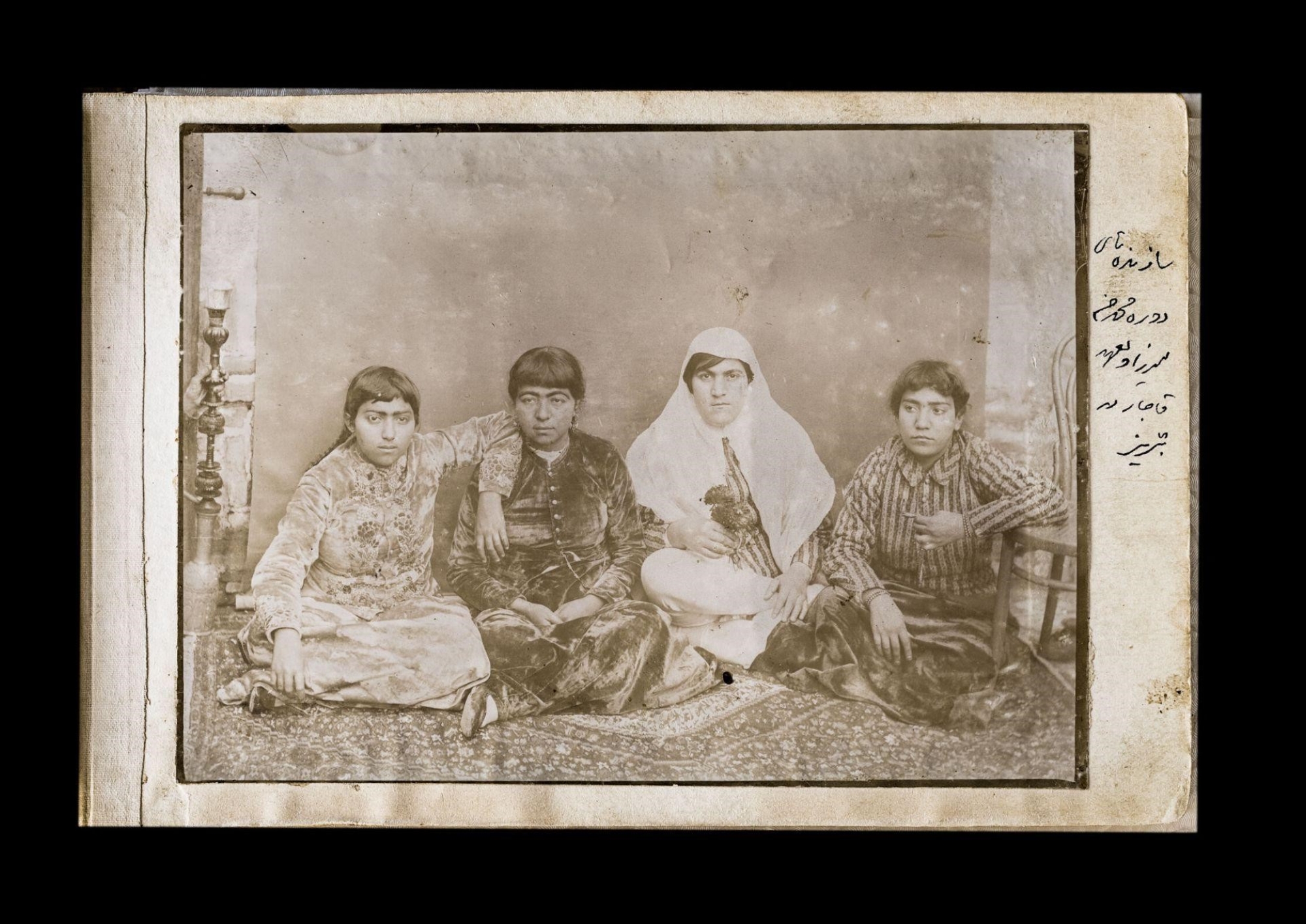
زينب باشا، المرأة المسلّحة التي تحمل الزهور في يديها. تبريز، تسعينيات القرن التاسع عشر.
امرأةٌ أنا
أنا الكادحة
التي صاغت من يديها سلاحا
- مرزية أحمدي1
هذه حكاية تمرّدٍ مسلّح من مسقط رأسي في زنجان، إيران. حكايةٌ تتقاطع فيها أمي، وجدّتي، وجدّي، وجنود روس، وامرأة مسلّحة غامضة، وبئر، وعدّة خيول، وحوض ماء، وجبروت الذاكرة – كلّها عند مفترقٍ واحد. أو لعلّ سبلهم ومواضعها لا تتقاطع…
بل تتصادم عند ذاك المفترق.
ربما، تُروى الحكاية، هكذا:
طفلةٌ تقرفص في قبو بيتٍ قروي، تختبئ مع أختها في قاع بئر. فُوهة البئر مغطّاة بسجّادة، أو بشيءٍ ثقيل كفيلٍ بإخماد كلّ صوت. في الخارج، يقترب الجنود الروس، وحوافر خيولهم تدكّ الأرض إيقاعًا بعد إيقاع. إنّها حكايةٌ عن الاغتصاب، لكن لا على نحوٍ صريح، ولا بالمعنى المباشر.
هذه الشذرات وصلتني عن أمي، ولا شيء فيها يقينيّ. من المتعذّر الجزم بأن الوقائع جرت على هذا النحو. فما يتسرّب من الذاكرة لا يصطفّ بالضرورة مع ما كان ممكنًا في الواقع. بئرٌ في قبو بيتٍ تبدو فرضيّة واهنة، وربما لم تكن هناك خيول أصلًا، وربما لم تبدأ الحكاية بهجوم الروس، ولا تنحصر في هذا المشهد وحده. تترنّح إذن، حبال السرديّة منذ بداياتها. تضطرب الحكاية كمحاولةٍ لإثبات "مشهدٍ دامغ"؛ تتأنّى، تُقيم مسرحها بعناية، ثم تتوقّف هنيهة لتسمّي "الاغتصاب"، وتُفرِط في التفاصيل، كأنها تحاول أن تسدّ فجواتها بنفسها. ماذا حدث بعد ذلك؟ ماذا حلّ بالفتاتين؟ لو كانت القصة تحمل يقينها في حبال الذاكرة، لكانت شقّت لنفسها تتابعيّةً واضحة، لكنّها بدلًا من ذلك راحت تدور، مثل الثّمالى، في حلقاتٍ متكسّرة: تتوقّف تفاصيلها، وتتردّد أفعالها، وتنكفئ على ذاتها. هكذا يغدو من المحال أن نعرف إن كانت الفتاتان قد تعرّضتا لاعتداءٍ أصلًا، أو إن كانت تلك البئر قد ابتلعت الجنود الروس خدعةً.
في هذه الحكاية، لا يثبت من الأشياء سوى القليل. الزمن يُرجَّح أن يكون مطلع القرن العشرين. المكان يُقال إنه قرية آزاد عليا في زنجان. والطفلة – جدّتي – اسمها بتول. وحدها الأسماء تبدو صامدة في هذا الاستهلال: اسمها، واسم القرية. ما عدا ذلك، معلّق، قابل للانزلاق وهشّ. ليست الحكاية عن بتول، ولا تنبع من صوتها. هي موجودة في المشهد لا أكثر، هناك… مختبئة في البئر مع أختها، بلا لغة، وبذاكرة مستعارة. حضورها يبدو استعارة سردية بكلّيته، لا شهادة. مَن الراوي الأوّل؟ أمي لا تتذكّر.
بتول هي الحجّة الوحيدة التي تنقذ الحكاية من الانزلاق نحو غياهب الأسطورة. بحضورها، تتماسك شذرات القصة بما يكفي لتتجلّى أمام سامعيها كتاريخٍ محتمل. بتول نبض الذاكرة، وإن كان نابضًا بإيقاع مضطرب؛ هي المرساة التي تبقي السرد معقودًا وهو ينهار على ذاته. لولا بتول – لولا وجودها في قاع تلك البئر المزعومة – لما ظهرت المرأة المسلّحة في الحكاية. بتول هي العتبة الأخيرة قبل أن يتلاشى أثر تلك المرأة الغامضة إلى الأبد، قبل أن يتبدّد وجودها كأنها لم تكن.
في قرية آزاد عليا في زنجان، تخبّئ النساء بعضهن البعض. يقفزن في الآبار، يتسلّقن الأسطح، يزحفن داخل جرار الزيت أو الأرزّ، ربما. يتحوّلن إلى حجر، ويغطّين فوهات الآبار حيث قد يُحبَس الآخرون. أيادي الاعتداء طويلة المدى: تصل إلى أعماق كلّ بئر، تتسلّق كلّ سطح، تتسلّل عبر الجدران، تخدش في صمت، وتلتهم. تُصرّ الحكاية على أن الاعتداء طال الجميع، رغم قلّة الأدلّة. تقول إن الاغتصاب دخل كل العتبات، إلا صفحات التاريخ.
الإشاعة أثقلُ وطأةً من التاريخ. فالأرشيفات لا تُبنى إلا مما قد يتذكّره اللاحق من الأجيال – أو مما تُحرّفه الأجيال. أما الزمن فقد بدّد بدوره الإلحاح: لِمَ الاستذكار الآن؟ ومن الساعي وراء هذه الذاكرة أصلاً؟ تواصل الحكاية سيرها؛ تُهذَّب المشاهد مرّة أخرى، وتُرسَم امتدادات محتملة لسردية غريبة عن أيّ ذاكرة جمعية تعرف الحكاية أو تعترف بها. تتراءى إجهاضاتٌ، جرائم "شرف"، انتحاراتٌ، أرزّ مسموم تبتلعه حناجر، وأجساد تُلقى في الآبار… أو ربما ليست كلّها إلّا همسات على هوامش السردية. طال النسيان هذه الحكاية… أو لعلّها طُولِبت بأن تُنسى.
تظهر امرأة غامضة، تنتظر عند منعطف الذروة القصصية: بلا إسم، عارية ومسلّحة. تظهر في ميدان من ميادين المدينة في ذروة الاعتداء – نسمّي الميدان "ميدان الانقلاب". وكما تقول أمي، "تصدّ بندقية المرأة" الاعتداء.
أمام الميدان ينتصب ملهى ليلي، غارقًا في زخّات الرصاص وفي نبيذ الجنود الروس المسكوب على كل سطح. تمشي المرأة الغامضة وحدها، وعند وصولها قلب البركة المائية، تقف، ترفع نقابها، لتظهر من تحت النقاب، بندقية موجّهة مباشرة إلى صدور الروس. تتحرّك شفتاها، ولا تخرج منهما سوى جملة واحدة:
"Qabağa gəl beni sick, qarnını doldurum tütünlə"
"حاوِلْ اغتصابي يا هذا، هيّا تقدَّم، لأملأ أحشاءك رصاصاً"
هل أطلقت النار؟ هل أُطلق عليها الرصاص؟ هل غرقت في مياه البركة ورقدت في قعر التاريخ؟ هنا تتعثّر معالم الحكاية في ذاكرة أمي، وتتفتّت إلى تفاصيل وخواتيم وتفسيرات متشعّبة ومتناقضة. تقول أمي إنها لا تعرف أحدًا من أبطال الحكاية، غير أنها سمعتها مرارًا وتكرارًا من والدها. ذاكرتها تتشظّى وتتقلّب، والتفاصيل تنزلق من متن السرد مع كل إعادة.
أحيانًا تكون المرأة عاريةً تمامًا. وفي روايات أخرى ترتدي ملابس داخلية. أحيانًا توجّه فوهة بندقيتها عاليًا نحو السماء، فتشقّ الرصاصة طريقها في الهواء. في رواية أخرى تطارد الجنود الروس حتى آخر الشارع، تطردهم خارج زنجان، وفي طريق عودتها تنال من رؤوس الرجال تأنيبًا لهم على جبنهم. أحيانًا تكون تلك المرأة زائرةً غريبةً عن المدينة، تسمع بخبر الاعتداء وتمضي. وأحيانًا يُقال إنها كانت امرأة متنكّرة في هيئة رجل، التقت جدّي في مقهى وسرّت له بما جرى. أحيانًا تظهر عضوًا ملتزمًا في حزب "توده"، مقاتلة شيوعية. وأحيانًا تتجسّد في صورة شاعرة… وفي أحيان أخرى تتوقف أمي وسط الحكاية وتتساءل: أكانت تلك القصة في عام 1941؟ أكانت أمي آنذاك طفلة؟ ثم تتبدّل الأسئلة: أم كان ذلك عام 1909، أثناء الاحتلال الروسي لأذربيجان؟ لم تكن جدتي قد وُلدت بعد… تتبعثر التواريخ، وتختلط الجذور، ويختفي الزمن، ومعه تتوارى شخصيات الحكاية. يبقى يقين واحد لا يتزعزع: كان يا ما كان، كانت هناك امرأة مسلّحة، وقد أطلقت تلك المرأة النار… وتنتهي القصة غير آبهة بالإجابة عن أي استفسار.
قد تُروى الحكاية بضمير الجمع الغائب: "كانوا يقولون إن…"، وتُختَم بسلسلةٍ من الشكوك: "والله أعلم إن كانت تلك حقيقة… من يدري مَن كانت، ومع مَن بدأت القصة؟". هكذا تتحوّل الذاكرة من مصدرٍ إلى مخرّبٍ في ملاهي التاريخ. تتّسع الذاكرة، تلقي غمامًا من الضباب، وتعيد ترتيب معالم الماضي. وليس في هذا فشل، بل خاصيّة ذات قيمة استراتيجية: فعلُ رفضٍ، ومحاولةٌ متأنّية لنزع البنية السردية الصلبة عن القصة، فلا دقّة إلا في الغموض. من يقرّر استدعاء القصة له أن يرويها كما يشاء، وليتقلّب هذا السرد مع كل راوٍ.
وعلى الرغم من أن القصّة حيّة في الذاكرة، يأتي الأرشيف ليعضدها: "تعرّضت النساء للاعتداء".2 وربما لا يأتي الأرشيف ليؤكّد فحسب، بل ليضيف "اطراءً" على الحكاية. ففي قصّة مشابهة من أرض أردبيل، واجهت امرأة تجمع القشّ جنديًا روسيًا ذا "نوايا همجية". وُثّقت قصتها في عمود صحافي، كُتب فيه أنها قاومت بلا خوف، وانتزعت من الجندي سلاحه وذخيرته وقبعته، وحاولت قتله بحربة البندقية.3 كُتب أن قلبها كان كقلب الأسد. وهكذا اختُتمت قصّتها.
لا أُبالي بما تحمله قصّة أمي من دقّة تاريخية صراحة، ولا بالتفاصيل. توقّفت عن التنقيب في الأرشيف عمّا يثبت وجود المرأة الغامضة. لا أرغب في تصويب قصتها، بل أشتاق إلى الإصغاء لتبدّلاتها، وجموح تفاصيلها من سردٍ إلى آخر. وأمي لا تحاول مطلقًا الالتزام باتساقٍ سرديٍّ؛ بل تناقض نفسها عن قصد، وتقتطع من شِعب الحكاية حصصًا، بحيث تتّكئ كلّ صيغة على الأخرى. تتعتّق القصّة في روايات أمي، لكنها لا تشيخ. أتقبّل قصّة أمي كما هي: حادثة، أعجوبة، حلم، خيال، مخيال، تساؤلًا عمّا كان ممكنًا أن يكون، وقلقًا إزاء تبعات ما حدث وما لم يحدث. إنّها حلم فاقع، يقاوم التاريخ وما يدّعيه من صلابة الماضي وثباته.
ولا أطرح على أمي سوى سؤالٍ واحد: لماذا ورثت هذه القصة عن والدها، لا عن أمها؟ وماذا عن بتول؟
تجيبني أو تبتدع إجابةً لي: كان والدها عاملَ محجر، يقضي ساعاتٍ طويلة في المقهى؛ ذلك الفضاء الذي كانت القصص فيه تُتداول بين الرجال كما تُتداول فناجين القهوة. لكنني أعود فألحّ عليها بالسؤال: أليست أمّك إحدى شخصيات القصة؟ لماذا لم تروِها هي لكِ؟ تهزّ كتفيها وتنهي الحديث. لا تعرف. لم يخطر لها يومًا أن تسأل. والآن، يصعب طرح هذا السؤال على ذاكرتها السبعينية الهوجاء؛ فقد رحل الراوي الأول، ورحلت معه قيمة السؤال ذاته.
كيف تدلّل بتول والمرأة المسلّحة، كلتاهما، على تاريخٍ يقاوم المحو؟ هل تستدعي إحداهما الأخرى كي تبقى؟ أم أنهما في مطاردة لا تنتهي، تتقدّم إحداهما خطوةً لتمنع الثانية من التلاشي؟ هل يجد التاريخ وجوده في القصة، أم أن القصة هي التي تستمرّ لأن أبطالها يناجون بعضهم عبر الأزمنة؟ ويا لهشاشة التاريخ. فقصّة بتول، إن رُويت دون قصّة المرأة المسلّحة – أو العكس – تنتفي حبكتها برمّتها، ويتداعى التاريخ.
ومع ذلك، لا يزال السؤال يلاحقني: مَن هي تلك المرأة المسلّحة؟ ما اسمها؟ ومَن الذي يُستدعى حين يُروى التاريخ؟
زينب
كان بوسع أمي أن تبدأ قصّتها باسم تلك المرأة – زينب ابنة زنجان – لتعضيد البعد التاريخي للحكاية ومنحها قدرًا من المصداقية، لكنها لم تفعل. فقد كانت أسس القصّة، في وعي أمي، مختلفة: هندام المرأة، وطريقة التحامها بالعدو، وقبل كل شيء الدافع الذي ساقها إلى القتال: عقيدتها البابيّة. تبدو هذه المرأة كأنها تقف على عتبات التاريخ، هناك في تلك اللحظة التي جعل فيها الحصار وبحر الدماء زنجانَ عام 1850 مسرحًا مفتوحًا للعنف. فقد أثار ظهور البابيّين اضطرابًا في الأوساط السياسية، والتباسًا في كتابات المؤرخين. اندلعت على إثره حركات مقاومة، ومعارك، واعتقالات، وإعدامات، وعمليات محو جماعي وتعذيب. قُمعت الحركة بصدامٍ دموي أفضى إلى مجزرة بحقّ أتباعها، تُرك شهداؤها في قبورٍ بلا أسماء. كلّ من تجرأ على مساءلة الدولة طورد وعُذّب. أما من تبقّى من البابيّين، فسيظهرون لاحقًا في هيئة انتفاضات سياسية وحركاتٍ نسوية في محطات مختلفة من التاريخ.4
زينب، في هذا السياق، ابنة الشقّ المحاصَر من زنجان. تظهر في أرشيف التاريخ عبر أربع صيغ متداخلة: امرأةٌ ترتدي ثياب الرجال، وشخصيةٌ تحمل اسماً مستعاراً لرجل (رستمالي، أو رستام، أو رستامه)، ومقاتلةٌ بشراسة الرجال، وشهيدةٌ بعظمة الرجال.5 وعلى خلاف تلك المرأة المجهولة في سرديات أمي، تدخل زينب الأرشيف مؤطَّرة سلفًا، بقصّة تبدأ من خواتيمها: مقاتلة، شهيدة، مضحّية، وبطلة. وبهذا التسلسل يمكن استيعاب طابع الذكورة في فعلها؛ فالرجولة التي احتوتها لا تحمل تهديدًا ولا نيّة تحدٍّ. أُرشفت قصتها بلغة لا تومئ إلى أي تشويش في البنية الاجتماعية أو انسلاخ عنها. يتذكرها الأرشيف، ولكن بمرارةٍ محسوبة. فزينب، وفق السردية الأرشيفية، ليست تحديًا يزعزع قصة حصار زنجان، بل إحدى خطوط فعلها المستبطَن: حتى النساء حاربن، ومن أبرز المقاتلات كانت… زينب.
من كانت زينب؟ يصفها أحد المصادر بأنها مزارعةٌ من قريةٍ صغيرة قرب زنجان، "فتاة قروية" "انضمّت بمحض إرادتها إلى مجموعة النساء والأطفال الذين شكّلوا وحدة المدافعين عن الحصن".6 في مصادر أخرى توصَف بأنها "عذراء"، ولها شقيقة تُدعى شاه سانام.7 وأحيانًا تظهر في الأرشيف بوصفها مجرد امرأة حضرت أثناء الحصار. تبدو تفاصيل حياتها ثانوية في طيّ الروايات، إذ تُستدعى بوصفها حجةً أو أداة تمجيد لوقائع تتجاوز شخصها – فاشتباكها المسلّح هو القيمة التي تفوق وجودها السردي.
في أحد المصادر، استُدعيت زينب بوصفها مفتاحًا لتفسير إخفاق الحكومة المركزية سابقًا في قمع تمرّد زنجان. ففي رسالة رُفعت إلى ناصر الدين شاه، عُزي صمود البابيّين إلى "مجموعة من الفتيات العذارى" اللواتي قِيل إنهن ألهبن حماسة الرجال. وفي هذا السياق، جرى الاستشهاد بزينب، بوصفها مثالًا على تماسك "عفّتها" و"شجاعتها" في مواجهة تلك الاتهامات.8 وتستحضرها مصادر أخرى على نحوٍ مغاير: مرّةً بوصفها مجهولة الهوية، مجرّد شخصية في خندق؛ ومرةً أخرى كامرأة حرب، "لا نظير لها في المبارزة أو الرماية".9 تذكر إحدى الروايات أنها كانت تقود تسعة عشر رجلًا، وتدافع عن خندقها خمسة أشهر متواصلة، تنام ورأسها على سيفها، وتتخذ درعها غطاءً، فيما يواصل جنودها تثبيت مواقعهم. ويُختتم الوصف بالقول: "تلك الفتاة الشجاعة وحدها كانت حرّة في أن تتحرّك في أيّ اتجاهٍ تشاء".10
rasooli_2_ar.png
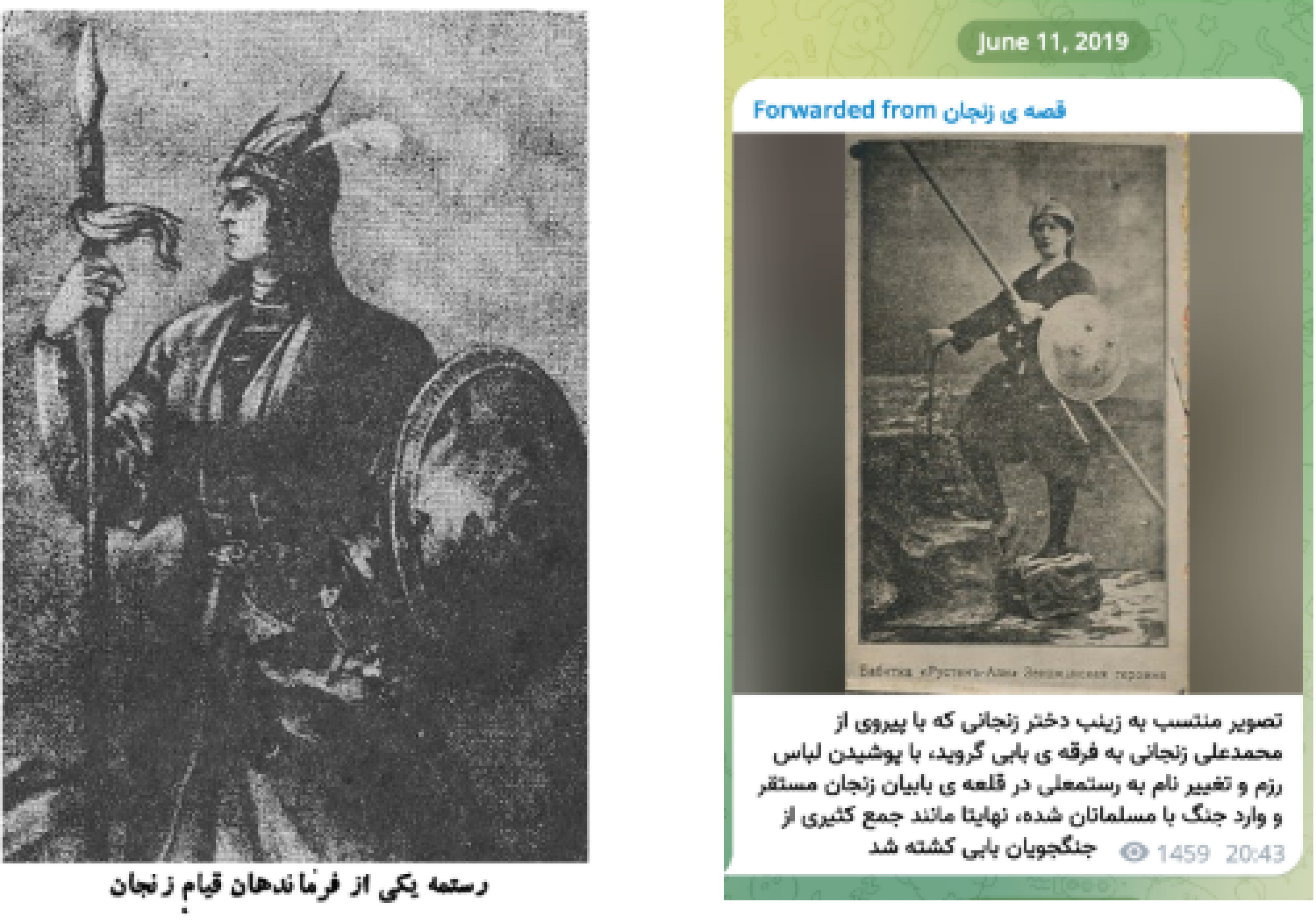
على اليسار: "روستامي، أحد قادة ثورة زنجان" (ناهد، 1989:13).
على اليمين: "صورة منسوبة إلى زينب، ابنة زنجاني…" لقطة مأخوذة من منشور على تيليجرام بواسطة (@afral)، 12 فبراير/شباط 2019، الساعة 11:03 صباحًا.
يبدو أنّ ثمّة إجماعًا في المصادر: كانت ترتدي ثياب الرجال، وتقاتل على نحوٍ يستحيل معه تمييزها عنهم. "لم يكن أحد قادرًا على التفريق بينها وبين الرجال"، يذكر أحد المصادر. ويضيف آخر: "ارتدت سترة، ووضعت غطاء رأس مثل رفاقها الذكور، ثم قصّت خصلات شعرها، وحملت سيفًا، واستولت على بندقية ودرع".11 تنكّرت "بهيئة رجل"، بحيث "لم يشكّ أحد بأنّها، في الأصل، من طبقة الخَدَم"، ودخلت الحصن. هنا تنقلب الحبكة، وتُفرط السردية في تعداد بطولاتها القتالية. وحتى في الرسمتين المنسوبتين إليها، تظهر زينب كمقاتلة: مقاتلة متخيَّلة بفمٍ بائس وعينين ثاقبتين. لا أنوثة ولا ذكورة في هندامها؛ إنها ترتدي زيّ القتال. شخصية تتأرجح خارج التقسيمات الجنسانية، أو بالأحرى، أو لعلها أُدرجت ضمن جنسٍ آخر: جنس الاشتباك.
في كثيرٍ من هذه السرديات، يُدفَع بالذكورة في قصتها إلى الهامش بوصفها سؤالًا سرديًا غير مرغوب فيه، أو يُعاد تعريفها على هيئة أنوثةٍ مبذولة أو عطاءٍ مؤنَّث. هذا الاضطراب الدلالي الجندري يُخفتُه فعلُ التأريخ، أو لعلّه نتاج استبعادٍ منهجي مارسه مَن أقحمها في هذا التاريخ. إن محدودية الاستذكار التاريخي لشخصيتها تعيد إنتاج التوتر نفسه باستمرار حول "ذكورة" وجودها في التاريخ، أو – وهو الأسوأ – تمحوه تمامًا، عبر اختزال فعلها في تضحيتها، وتصوير "الأنوثة" بوصفها جوهر تلك التضحية، وتطبيعها ضمن قوالب "البطلة" أو "العاشقة" التي لا تذرف "دموعًا في غير أوانها" عند سقوط "حبيبها".12
هنا تنتهي القصّة، بخاتمةٍ مفروضةٍ فرضًا، تُقيِّد زينب في الماضي على نحوٍ يستولي على كل محاولة لاستذكارها – إن جرى استذكارها أصلًا. ونادرًا ما يحدث ذلك: تكاد زينب تغيب كليًّا عن تأريخات الحركة البابيّة، وسرديات الحركات النسوية الإيرانية المعاصرة. ولا يُستدعى اسمها إلا بوصفها صدىً لأسطورة المرأة الزنجانية الغامضة: المدينة ذاتها، والشخصية المسلّحة المماثلة، كلاهما بالكاد يُذكَر، ولا تومض آثارهما إلا عابرًا عبر أرشيفات متفرقة، فيما تتأرجح الذاكرة بينهما.
ويستمرّ هذا الاستدعاء المتشابك: تنتهي قصّة زينب ابنة زنجان، لتبدأ في المقابل قصّة زينب أخرى مسلّحة – قصّة زينب باشا.
تظهر زينب من جديد
تجلس بهدوء بين ثلاث نساء أخريات، فيما تنسدل ستارة الاستوديو خلفهن. يحيط وشاحٌ أبيض بوجهها، وتتدلّى خصلات قليلة من شعرها، وتستقرّ أزهارٌ بين أصابعها. نظرتها هي الوحيدة التي تلتقي بالكاميرا، بلا ابتسامة. تشير كتابةٌ بخطّ اليد على الصورة إلى أنها صورة لها في شبابها، جالسةً إلى جانب رفيقاتها المناضلات. قد تكون هي بالفعل، أو مجرد إسقاط – رغبةٌ في إسناد الصورة إليها وربطها بها.13
rasooli_1_ar.jpg
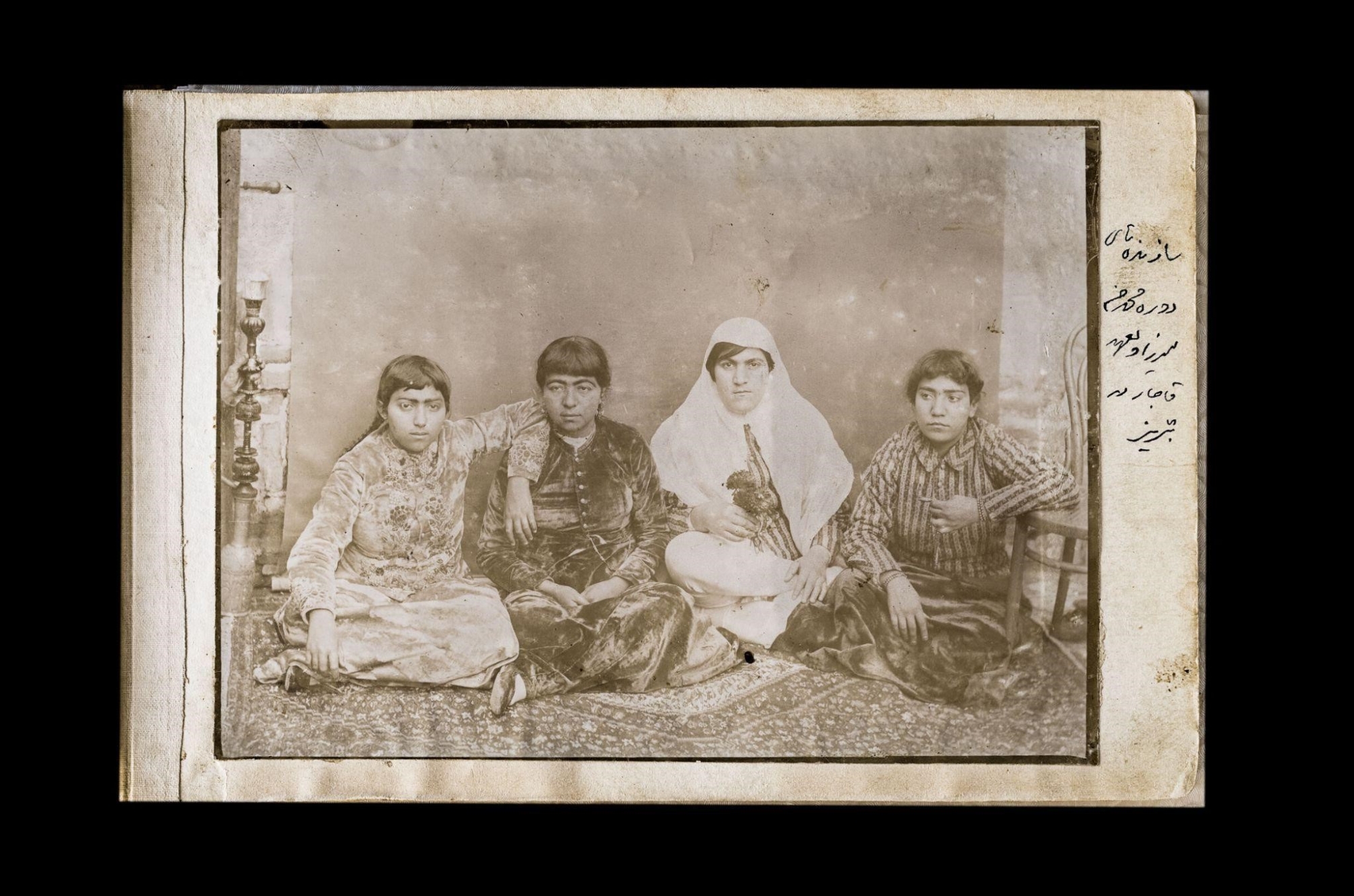
زينب باشا، المرأة المسلّحة التي تحمل الزهور في يديها. تبريز، تسعينيات القرن التاسع عشر.
الأسلحة، والحجارة، والهراوات، والنار، والقمح، والخبز، والتبغ: كلّها خيوطٌ محتملة في حكاية زينب باشا. وُلدت زينب باشا في أسرةٍ ريفية فقيرة، وحملت السلاح في تبريز، في زمنٍ كانت فيه المدينة بأسرها في حال تعبئة، ردًّا على امتياز ناصر الدين شاه، الذي منح شركةً بريطانية احتكار شراء التبغ وبيعه في عموم إيران، ثم لاحقًا خلال انتفاضة الخبز في تبريز. من كانت؟ شخصيةً تشدّ هراوةً في يدها، مستعدّة لضرب البازار وإحراقه، واقتحامه، ومواجهته، والعودة إليه مرارًا، جنبًا إلى جنب مع نساءٍ مسلّحات أخريات، لإشعال الاضطرابات مرّة بعد مرّة. في كل روايةٍ تُنسَب إليها، تُصوَّر زينب باشا بوصف14. تقود وتنظّم الإضرابات. "تحدّد مخازن الحبوب أو بيوت المحتكرين، وتداهمها مع نساءٍ أخريات من تبريز، فتفرغ المخازن، وتوزّع الحبوب على الناس".15 إنها فدائية، هندامها مفارق، لا يستعير شكله من هيئة ايّ امرءٍ.
زينب باشا ليست امرأةً هادئة، ولا رجلًا عاديًا؛ إنها خروجٌ عن المألوف في كلا العالمين. غير أن التاريخ لا يدوّنها بقدر ما يعيد تشكيلها. فهو يتمنّى لها أن تكون تلك التي "تحلّ محلّ الرجل"، لسدّ الفراغ الذي خلّفه ما سُمّي بـ"تقاعس الرجال". ويُقدَّم ظهورها في الحيّز السياسي المهيمَن عليه ذكوريًا بوصفه طارئًا وعابرًا. وما يتبقّى منها، في أغلب السرديات، ليس سوى توصيف لبنيتها الجسدية: "قوية البنية". وعلى خلاف زينب الزنجانية، لم تُسقَط على هندامها الفدائي أي صفات رجولة. وُصفت وهي ترتدي الشادور مشدودًا إلى خصرها، مرفوعًا، وأكمامها مطويّة – وهو توصيف لا يُقدَّم بوصفه تجاوزًا ولا تنكّرًا. فالتاريخ، إذ عجز عن احتوائها ضمن بنيته الجندرية، ابتكر لها صورةً تفسّر وجودها: لم تكن رجلًا، ولم ترتدِ زيّهم، ومع ذلك شغلت موقعهم، وأصبحت "مثلهم".
في إحدى الحكايات، يمنحها المؤرّخ صوتًا – وإن كان صوتًا مشروطًا، لا يظهر إلا في ردّها على تقاعس الرجال. فتأتي زينب "لتشجيع الرجال وحثّهم على القتال واقتلاع الظلم".16 وفي المساحات السياسية التي يهيمن عليها الرجال، حيث يهدّد وجودها سلطتهم ويزعزع امتيازهم تفول:
إن لم تكن فيكم، أيّها الرجال، شجاعةٌ للفعل، فاتركوا لنا أمر معاقبة الظالمين. وإن كنتم تخشون قطع أيدي اللصوص والناهبين عن أموالكم وشرفكم ووطنكم، فخذوا حجاب نسائكم وضعوه على رؤوسكم، والزَموا بيوتكم، ولا تتحدّثوا بعد اليوم عن الرجولة أو الشجاعة. نحن من سنقاتل الظالمين نيابةً عنكم.17
ويُقال إن زينب ألقت بعد ذلك شادورها، "رمز أنوثتها"، نحو الرجال، وفي خضم دهشتهم واستغرابهم، اختفت عن الأنظار.
بعبارةٍ أخرى، إنّ تخلّيها عن أنوثتها ليس سوى مواجهة للرجال في إخفاقهم لمعيار الرجولة. وعندما تتقدّم إلى صدارة الساحة السياسية، تبدو وكأنها تحتلّ مكانة الرجولة مؤقتًا. ففاعلية حضورها السياسي تتقاطع تمامًا مع وجود الرجال: إذ يُعاد إنتاج البنية الجندرية لتقيس حضور المرأة المناضلة بحسب مدى تماثلها معهم، وفي هذا التماثل تمنح الإذن بالكلام. ومع ذلك، فهي لا تسكن هذا الحضور المنظم بهدوء؛ هناك شيء يتسرّب، شيء يبقى متقلّبًا، هشًّا، وغير مستقر.
قصّة زينب تكمن في مسألة تفوّقها. جبروتها لا يكمن في سمات الذكورة التي تحملها بل في أنّ وجودها بحدّ ذاته كان كفيلاً ب زعزعة القواعد السياسية المحدِّدة لشروط الحضور ونيل الاعتبار. حين يقابل المؤرّخ زينب باشا يميل مباشرة الى تلقيبها بالـ"اللبؤة" ويحدّد سلالتها على أنّها تنحدر من "رجال نبلاء" في التاريخ.18 وتُوصَف زينب باشا بأنها "التجلّي الصارخ لمعاناة امرأة إيرانية مقهورة"، غير أن حضورها النضالي في التاريخ يأتي على حساب محو زينب الزنجانية. إذ يكتب أحد المؤرّخين، في سياق حديثه عن زينب باشا، أنه "وللمرة الأولى، تحدّت امرأة تقاليد عصرها وحملت السلاح سعيًا لتحقيق العدالة لنفسها ولشعبها".19 إنها زينب مرّة أخرى، شخصية فيها "شبه من الرجال": "إنّها زينب الحرّة من أي قيد اقطاعي، كالرجال الخارجين عن القانون، تتردّد الى المقاهي وتجلس بين الرجال دون خوف، تدخّن النرجيلة".20
تلك هي المشهديّة التي تطارد الخاتمة الأخيرة لقصّتها. تختفي في غموض، شأنها شأن المرأة المسلّحة في حكاية أمي: كلتاهما تتواريان دون أن تخلّفا أثرًا أو علامة تهدي إلى المصير الذي ابتلعهما. وفي الفقرة الأخيرة من السرد، تتجه المرأة إلى كربلاء، وهناك أيضًا تقود مظاهرة كانت قد حرّضت لها؛ ثم ينقطع الخيط السردي. لا أحد يعرف شيئًا عن مصيرها بعد تلك الواقعة.21 متزعزعةَ المعالم، مقلِقةً للمؤرّخين، تظهر المرأة الفدائية من العدم، وتُدفَع إمّا إلى الشهادة أو تتلاشى فجأة في ضباب الغموض. تباغت كلَّ التوقّعات: من اللاشيء تأتي، وإلى اللاشيء تعود. مزعِجة، مخلخِلة لمعالم الزمان. يحاول السرد الجندريّ التاريخيّ اللحاق بها واعتقالها داخل تعريفٍ يُفرغ طبيعتها الجامحة، غير المؤطَّرة وغير المستأنسة. لكنّها تفلت، وتفيض من الخدوش التي تُحدثها في متن التاريخ. تفيض عن البنية المفروضة على قصتها؛ فتتشقّق هذه البنية، وتتداعى، وتنزلق، رغم كل المحاولات لإعادتها إلى نمطية سردية منضبطة.
هل يمكن لزينب باشا أن تمنح نَفَسًا كويريًا يدعم المنهجية التي يصبو إليها التأريخ الكويري؟ أيّ كويريّةٍ تلك التي تسكن كلَّ ما يأبى القولبة، وكلَّ ما يقاوم التعريف المحض؟ وأيّ كويريّةٍ تتجلّى في المرأة المسلّحة المجهولة، التي تجوب مسارب الذاكرة السياسية الممحُوّة، تتسلّق إلى سطح السرد للحظة، ثم تهوي سريعًا إلى القاع؟ ليست زينب رمزًا للفقدان، ولا أيقونةً تستجدي الاسترداد. تحوم في الأرشيف، ويتأرجح حضورها بين المحو والعودة. بغزارة طبعها القصصي، وباستحالة احتوائها ضمن تعريفٍ تأطيري، تُزعزع المرجع ذاته، وتَدفع بالمقاربة الكويرية خارج منطق الفقدان، وخارج هاجس الاسترداد أو "استصلاح" الأجساد المقصاة التي ينشغل بها التأريخ الكويري. فهي تُجبر المؤرّخ على تبنّي شيءٍ من الجماعية، ومن التسييس، ومن المقاومة المسلّحة، وعلى التورّط في أزمنةٍ قوامها الشقوق والشكوك والاختلالات. ماذا لو استعارت المنهجية الكويرية مفهوم الوجهات المتعدّدة من هذه "المدرسة الزينبية"؟ مدرسةٌ تتجسّد في شخصيات لا تُعرَّف صراحةً بوصفها كويرية، لكنها تُقلق، وتُصدّع، وترفض الاحتواء. كويريةٌ بلا لقب، لكنها تشقّ طريقها عكس تيارات البُنى المهيمنة. مرجعيةٌ تُدلّل على المرأة المسلّحة، ثم تُسارع إلى النزوح عنها، وعن تفاصيلها، في آن.
زينب باشا وزينب ابنة زنجان، تلك النساء المجهولات المسلّحات، لا يظهرن إلا دومًا إلى جانب آخرين. حضورهن يستدعي حضور الغير، يتجاورن، يدندنّ معًا، ويبعثرن دخان الرصاص في كوكبةٍ من الفعل الجماعي الذي يعيد نقش التاريخ عبر طوقٍ من تخيّلٍ مقلق، قادر على زعزعته. هي قصّة غير منتهية، قصّة لا تحتمل الاحتراف ولا تُصان بالتكرار؛ لا يحفظها شيء سوى ظهورها المتقطّع وعوداتها الملحّة، كيفما جاءت، وبأي هيئة بدت.
اغتيال زينب
هل من مكانٍ لشخصية الفدائية المسلّحة في المخيال الكويري السياسي للماضي؟
في الصفحات الأولى من كتابات النساء في إيران، كانت أولى الشخصيات التي تطفو عند الحديث عن النساء الفدائيات هي جان دارك. فكلّما وُصِفت الحركة النسوية في إيران بأنها "فاسدة أخلاقيًا"، سارعت أقلامها إلى استدعاء جان دارك مثالًا لـ"العفّة" ورمزًا للتضحية المتفانية من أجل الأمّة: بطلةً وشهيدة.22 نقلت وسائل الإعلام المحلّية أخبارًا عن عروضٍ مسرحية تناولت سيرة جان دارك في إنجلترا، مع الإشارة إلى أن نساءً أخريات في المسرحية كنّ مسلّحات.23 وفي قصيدة موجّهة إلى فتيات إيران، كتبتها مديرة مجلة "دوختاران إيران" عام 1932، تواصل صورة جان دارك مطاردتهن: "لا أقول، يا نساء، أن نصبح جميعًا مثل جان دارك؛ فمع أنّ روحها كانت قوية، إلا أننا ما زلنا نتألّم".24 وكما هو متوقّع، لم تظهر زينب في هذه الكتابات، بفعل القمع الذي طاول ذكرها.
فمنذ البداية، قدّمت السرديات التاريخية السائدة لنضال المرأة في إيران جان دارك بوصفها ضحيةً مثالية وشخصيةً مأساوية. ومن خلال هذه الصورة النمطية، تَكرّس مفهومٌ موحّد ومركزي للضحية، منزوع البعد السياسي: المرأة الإيرانية "البائسة".
ضمن هذا الإطار، تُغشي شهرةُ بابيّةِ زنجان على قرّة العين، التي، رغم انتمائها إلى الحركة البابيّة نفسها ومواجهتها مصيرًا قريبًا، جرى الاحتفاء بها أساسًا بوصفها المرأة التي كشفت جسدها. وبالمثل، تتضاءل التجربة النضالية لزينب باشا حين تُقاس باحتجاج التبغ الشهير (1891–1892)، حيث استُحضرت مشاركة نساء حريم ناصر الدين شاه – بانضمامهن إلى المقاطعة وكسرهن أكواب الشيشة – بوصفها الحدث النسوي الأبرز، على حساب أشكال أخرى من الفعل السياسي النسائي المسلّح والمنظَّم.
ما تفعله السردية الـ"جان داركية" هو محوُ النزعة النضالية الكويرية لدى الزينبات. ففي هذه السياسة السردية، يُزاح الفعل المسلّح عن مركز الحكاية، وتُحجَب المجابهة تحت نظامٍ من الإظهار والتمثيل. يفضّل التاريخ الحجابَ على السلاح، والقابليةَ للقراءة على الإبهام، والتقديسَ على التخريب. وضمن هذه إعادة التشكيل، تبقى القدّيسة رمزًا لتماسكٍ أخلاقيٍّ مُتخيَّل، بينما تُجرَّد المتمرّدة من إمكان التمثيل أصلًا – ويُطوى اختفاؤها في صلب نحو السرد التاريخي ذاته.
تتجلّى هيئة المرأة المناضلة على هذا النحو: تقف في قلب زمنٍ ينهار، بين شذرات متناثرة وسحوبات ذاكرة مرتعشة؛ كيانًا ليس امرأةً تمامًا، ولا رجلًا بعد – حالة "لا-هذا ولا-ذاك". تحمل بندقية موجّهة نحو المستغِلّين، والطغاة، والجلّادين، أو لعلّها مصوَّبة نحو مستقبلٍ تدرك سلفًا أنه قد حُجب عنها. حضورها الكفاحي يحطّم البُنى الجنسية والجندرية، بوصفه نمط وجودٍ فوضويًا، ينفلت في اللحظة ذاتها التي يُسمّى فيها أو يُقبَض عليه. إن بروزها المفاجئ، ثم اختفاءها، يؤسّسان لزمنية لا تُرى إلا عبر الانقطاعات: عبر الشذرات المتلاشية، والاستدعاءات، وإعادة التخييل. مُقصاة من الأرشيف، مطرودةٌ من التاريخ، ومع ذلك لا تُمحى تمامًا من الذاكرة – تقف جان دارك أمامها، رمحها ثابت لا يتحرّك.
منذ اللحظة الأولى لالتقائهما، تكشف الحكاية خاتمتها سلفًا: تُقتل زينب على يد جان دارك. فالضحية، بمكرها، تذبح الفعل الفدائي. ومع ذلك، تومض زينب، تعود للظهور، وتُقتل من جديد – في كل مرّة تعود، وفي كل مرّة يُغتال وجودها.
من زينب باشا إلى زينب ابنة زنجان إلى المرأة المسلّحة الغامضة والكثير من الفدائيات الأخريات، يبقى السؤال: ماذا سقط في طيّ مَن سرَدَ قصصهن؟ هل سقط سلاحهنّ أم سقطت كويريتهنّ؟
- 1. مرزية أحمدي أوسكويه (1941–1974) شاعرة ومعلّمة ومناضلة يسارية، وعضو في "منظمة فدائيي خلق" الإيرانية. اغتالها جهاز السافاك عام 1974. وتَرِدُ هذه الأسطر ضمن قصيدةٍ أطول لها بالفارسية بعنوان "من یک زنم" ( امرأة أنا).
- 2. Ra’d Newspaper (1918).
- 3. Iran-e No Newspaper (1911).
- 4. يُشار إلى الانتفاضة البابيّة في زنجان – والتي عُرفت أيضًا باسم الاضطراب البابي، أو الانتفاضة، أو "الحرب المقدّسة"، أو حصن علي مردان خان في زنجان – بوصفها صراعًا مسلّحًا استمرّ تسعة أشهر (من أيار/مايو 1850 إلى كانون الثاني/يناير 1851) بين بابيّي زنجان وسلطة الدولة القاجارية في المدينة. وقد أفضى هذا الصراع إلى حصار أتباع الحركة البابيّة، ووقوع مجازر جماعية، ثم إعدام المقاتلين الذين نجوا من الحرب. وقد سجّلت بعض المؤلفات التاريخية وقائع تلك المرحلة تحت تسمية "الفتنة"، في انسجام مع تقليدٍ دينيّ اعتاد وسم أي عقيدة جديدة داخل الإسلام بالهرطقة أو الخروج عن الدين. وللاطلاع على سردٍ تفصيلي لانتفاضة زنجان أنظر والبريدج Walbridge (2022).
- 5. إن الروايات المباشرة التي توثّق النساء في ثورة زنجان لا تزال في الغالب موجودة في أعمال الكتّاب والمؤرّخين البابيّين، ومن بين المصادر الرئيسية كتاب "تاريخ وقائع زنجان" لميرزا حسين زنجاني، الذي كتب على الأرجح عام 1880، وكتاب "تاريخ جديد" لميرزا حسين همداني، الذي كتب على الأرجح عام 1893، وكتاب "تاريخ نبيل" الذي كتبه نبيل الأعظم على الأرجح في الفترة 1887-1888.
- 6. Zarandi (1932:550).
- 7. Zanjani (1903:40).
- 8. Ibid.:39-40.
- 9. Zanjani (1897:801).
- 10. Zarandi (1932:551).
- 11. Ibid.: 550.
- 12. على الرغم من أن وسائل وصول واتسون إلى قصة زنجان لم يتمّ ذكرها صراحة في الكتاب، إلا أن عبارته عن "شجاعة" نساء زنجان، ومقارنتهن بـ "خادمات سرقسطة" (1866:391)، تمّ الاستشهاد بها دون نقدٍ في استذكار قصّة زينب في عددٍ قليلٍ من الأعمال التاريخية عن النساء في إيران، بما في ذلك دراسة ناهد (1989:12-13).
- 13. تظهر الصورة المنسوبة إلى زينب باشا في نسختين على الأقل، بخطّين مختلفين. النسخة المستخدمة في هذا النص مأخوذة من مجموعة فيروز فيروز، والتي يمكن الوصول إليها عبر الأرشيف الإلكتروني لعالم المرأة القاجارية. أما النسخة الأخرى، المحفوظة في أرشيف الفرع الشمالي الغربي للمكتبة والمحفوظات الوطنية في تبريز، فتقول الكتابة: "زينب باشا ويوزباشي خاور ونجيب كلثوم في شبابهم".
- 14. AzarNahidi (2005:149).
- 15. Ibid.:140.
- 16. Nahid (1989:43).
- 17. Ibid.
- 18. AzarNahidi (2005:137); Rezazadeh Amo Zeynaldini (2009:9).
- 19. AzarNahidi (2005:148).
- 20. Ibid.
- 21. Ibid.:149.
- 22. Jalili (1908).
- 23. Zaban-e Zanan (1920:4); Shokoufeh (1914:1).
- 24. Shirazi (1932:24-5).
AzarNahidi, ‘Abdolhossein. Se Mobarez-e Mashruteh [Three Constitutional Fighters]. Tabriz: Akhtar, 2005.
Firouz Firouz. "Four Women." Firouz Firouz Collection, record no. 1275A8. Retrieved from: Qajar Women’s Archive. http://www.qajarwomen.org/en/items/1275A8.html
Iran-e No Newspaper. “Woman’s Self-Defence Against Russian Soldier, 1911 (Item 15158F135).” Iran-e No Newspaper, 23 July 1911. Retrieved from: Women’s Worlds in Qajar Iran. www.qajarwomen.org/en/items/15158F135.html
Jalili, Mohammad Qoli Zadeh. “Daneshmandan.” Molla Nasreddin, no. 16 (13 Apr. 1908).
Nahid, Abdul-Hossein. Zanan-e Iran dar Jonbesh-e Mashruteh [Iranian Women in the Constitutional Movement]. Navid Publications, 1989.
Ra’d Newspaper. “Reports from Zanjan,” Ra’d Newspaper, 8 Feb. 1918.
Rezazadeh Amo Zeynaldini, Majid. Zeynab Pasha. Tabriz: Akhtar Publishing, 2009.
Shirazi, Zendokht. “Address to the Girls of Iran.” Dokhtaran-e Iran, vol. 1, no. 3 (May-June 1932): 24-5.
Shokoufeh. “Women’s Demonstration in London (Joan of Arc).” Shokoufeh, vol. 2, no. 22 (29 Jan. 1914).
Walbridge, John. “The Babi Uprising in Zanjan: Causes and Issues.” Iranian Studies, vol. 29, no. 3–4 (2022): 339–362.
Watson, Robert Grant. A History of Persia from the Beginning of the Nineteenth Century to the Year 1858. London: Smith, Elder & Co., 1866.
Zaban-e Zanan. “A Performance in Memory of Joan of Arc.” Zaban-e Zanan, vol. 2, no. 32 (4 July 1920).
Zanjani, Aqa ‘Abdu’l-Ahad. “Personal Reminiscences of the Insurrection at Zanjan,” translated by E. G. Browne. Journal of the Royal Asiatic Society, vol. 29 (1897): 761–827.
Zanjani, Mirza Husain. Tarikh waq'at Zangan. 1321 [1903]. Staatsbibliothek zu Berlin – Retrieved from: Digitale Sammlungen, PPN 844184888. digital.staatsbibliothek-berlin.de/werkansicht/?PPN=PPN844184888
Zarandi, Nabil. The Dawn-Breakers: Nabíl’s Narrative of the Early Days of the Baháʼí Revelation, translated by Shoghi Effendi. Baháʼí Publishing Trust, 1932.