
Desiring Arabs, Desiring Legitimacy: A Situated Critique of Joseph Massad’s Intellectual Violence
dabke_website.jpg
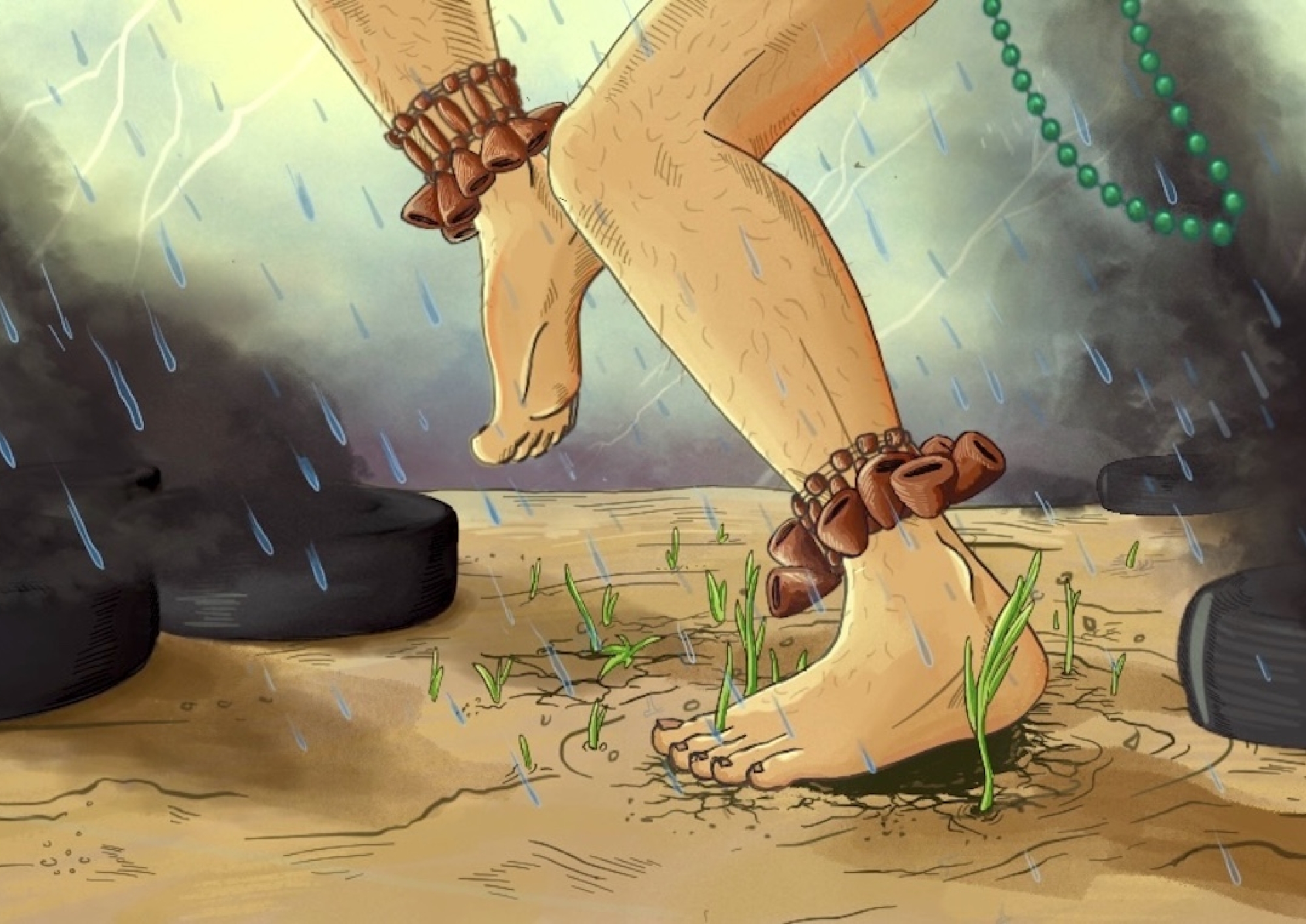
Sarah Al-Sarraj - Dabke
This article emerged from a seminar led by Catherine Konig Pralong in the spring of 2023, with reflections on positionality further refined during the CEFRES-EHESS Annual PhD Workshop titled “Dynamics of Political Participation: Disciplinary Knowledge through the Prism of ‘Area Studies’.” Though I initially planned to publish it shortly thereafter, the genocidal war on Gaza and its devastating toll on Palestinians – both within Gaza and across the diaspora – made publishing a critique of a Palestinian scholar’s work feel unconscionable, regardless of its subject matter.
As time has passed, however, the imperatives have shifted. With global economic recession fueling the rise of reactionary governments worldwide, funding for small but vital journals like Kohl is disappearing. I have always envisioned publishing this piece in Kohl – one of the few academic journals centering gender in the Arabic-speaking region, unapologetically anti-Zionist, and whose readership would be familiar with the themes and debates I engage here. The urgency of publishing with such platforms, particularly in this moment of contraction, ultimately compelled me to move forward with publication.
Introduction: A Personal and Political Encounter
In 2014, I attended a lecture by Joseph Massad at the American University in Cairo (AUC) with a group of queer activist colleagues. Though my queer activism had taken root in Beirut, I lived in Cairo at the time, from 2012 up until my unofficial expulsion in late 2015. The lecture did not address sexuality in the Arabic-speaking world, nor did it discuss coloniality. Massad simply rehashed romanticized clichés about Arab civilization, moving from one Arabic term to another, explaining them in English to demonstrate the beauty and nuance of meaning. Considering the scope of the discussion, it was impossible to have a conversation about the subject that had motivated us to be present on that day – Massad’s book Desiring Arabs.
In the 2010s, LGBT organising in Lebanon, at least, was mostly split between two factions that, while converging on the recognition of homophobia’s existence, adopted markedly divergent positions regarding its causes and potential remedies. On one side stood the identity-based LGBT groups; on the other, the queer feminist groups.1 In relation to the arguments discussed by Joseph Massad in his work, the identity-based LGBT networks most closely resemble the paradigm he envisions as the outcome of manipulations orchestrated by what he terms the “Gay International,” as is reflected in the examples he draws on. These networks blamed Massad for denying the legitimacy of the discourse articulated by Arab homosexuals and for undermining their right to claim the identity of “homosexuals” itself. Within queer feminist circles, however, opinions diverged concerning the political and scholarly significance of Massad’s oeuvre.
Though I more generally fell in the category of queer feminist organizing, I found myself opposing him on two principal grounds: first, his reduction of gendered and sexual liberation movements in the Arabic-speaking world to mere products, agents, or informants of Western imperialism; and second, his presumption to make such assertions without having engaged directly with the activists or histories concerned.
The choice of the American University campus as a venue is likewise far from incidental. In Cairo, for instance, people recalled the time when Hossam el Hamalawy,2 then a student at AUC, was arrested on campus by Egyptian police and tortured in the year 2000. A photographer friend once guided me through Tahrir Square and, on Mohammed Mahmoud Street, pointed to the rooftop of the AUC campus where he said police officers had been positioned during the tragic events later known as the Mohammed Mahmoud massacres of 2011 and 2012, from which they fired upon demonstrators. In 2019, during Lebanon’s October Revolution, I accompanied unconscious protesters in ambulances to ensure that they would not be taken to the American University of Beirut Medical Center (AUBMC), one of the few hospitals in the city rumored to have permitted police to enter and arrest injured demonstrators.
Massad, notwithstanding his status and the critical tenor of his discourse, accepted invitations to speak at the campuses of American universities when visiting Arab cities, addressing in English primarily expatriate audiences who, for the most part, seemed to have never undertaken to learn Arabic. This brings into question the coherence of Massad’s own discourse: while he vehemently condemns local actors for any association with Western institutions, he allows himself to collaborate with an institution whose political deeds in the region remain controversial.
In the following pages, I will examine the critiques that have emerged around Desiring Arabs and its author, Joseph Massad. I will focus on the question of discursive legitimacy, or, more precisely, the mechanisms of delegitimization, as analytical tools that Massad mobilizes to minimize or silence local voices.
I regard my lived experience – personal, activist, and professional – as relevant to a contextual understanding of Massad’s work. It thus constitutes a situated analysis that documents the evolution of my own perspective: from how I perceived the text as a queer activist in Beirut and Cairo who had not yet read it, to my impressions upon my first reading of it, and finally to a second reading undertaken in 2023 as a migrant student in France. While I take full responsibility for the conclusions presented herein, it is essential to emphasize that this intellectual evolution could not have occurred without numerous conversations with others, mostly thoughtful and supportive friends from activist and academic circles.
This article also seeks to foreground the voices of LGBT, feminist, Arab, and Arabic-speaking individuals in this broader discussion. It is therefore important to note that I am personally acquainted with many of the authors cited, including Fadi Saleh, Ghassan Makarem, Scott Long, Ghassan Moussaoui, Sofiane Merabet, Dima Kaedbey, Bernadette Daou, and Lisa Duggan, several of whom are or have been friends. I have likewise engaged for extended periods with a number of the groups referenced here, notably Helem, Aswat, and Kohl.
Who is Joseph Massad?
Joseph Massad3 is an Associate Professor at Columbia University in New York, where he teaches modern Arab political and intellectual history. He was born in Amman, Jordan, in 1963 – four years prior to the Naksa of 1967 – into a Palestinian family displaced by the Israeli occupation. He began his education at the Collège de la Salle, a prestigious private school in Amman, before pursuing engineering studies at a university in New Mexico. Confronted with persistent racism, exposed to a growing body of literature on the occupation of Palestine, and profoundly affected by the Sabra and Shatila massacre of 1982, he redirected his focus toward political studies.
Massad subsequently continued his academic training at Columbia University, where he developed a close intellectual relationship with Edward Said, frequently found himself in conflict with Zionist interlocutors,4 and eventually completed his doctoral dissertation, published in 1998. His first monograph, Colonial Effects (2001), was based on that dissertation. The 9/11 attacks took place in the same month the book came out. Beyond the trauma the attacks generated, they dramatically transformed the lives of Arab and/or Muslim individuals residing in the United States. It was during this period that Massad began his work on Desiring Arabs.
Joseph Massad’s biography reveals a life profoundly shaped by direct exposure to Israeli Zionism, American imperialism, and broader colonial structures. Considerable financial privilege fundamentally enabled his intellectual trajectory: the freedom to migrate internationally, access to prestigious universities, the latitude to undertake a significant academic pivot from engineering to the social sciences while living abroad, and the time to research and publish extensively, all without the constraints of financial precarity or the need for survival-level employment that affects many scholars.
The Architecture of Desiring Arabs
Desiring Arabs begins with an admission: the book’s focus on desire was secondary, born from Massad’s “political frustration with the nature of Western political discourse on and journalistic representations of the sexual desires of Arabs” (2007:ix). What was meant to be a study of “culture, heritage, and modernity” (ibid.) became instead an intellectual history of representations of Arab desires and their links to civilizational worth. In other words, Massad did not set out to write a history of sexuality but rather to explore Western view of sexuality.
The book’s six chapters are divided into three thematic sections. The first theme examines twentieth-century intellectual debates about sexuality, notably the controversy over Abu Nawwas and Salah al-Munaggid’s work on Arab sexual life (1975:184). The second introduces the concept of the “Gay International,” Massad’s term for Western NGOs and media promoting universalist LGBT identity politics, and analyzes how Islamist movements have reappropriated ancient texts to conflate moral degeneracy, Western influence, and HIV emergence. The third section turns to literary representations, comparing works published before and after the emergence of the Gay International.
Methodological Absences
Before analyzing the text, we need to take a moment to understand who or what the subject of Massad’s study is. In his introduction, Massad asserts that his book “is decidedly not a history of ‘Arab sexuality,’ whatever that is, but an intellectual history of the representation of the sexual desires of Arabs in and about the Arab world, and how it came to be linked to civilizational worth” (2007:49). In 2009, an interview followed by two responses published in ResetDOC constituted a back and forth between Massad and Ghassan Makarem.5 In his counter-response,6 Massad stated that he does not speak about homosexuals per se, but rather about the internationalists (or universalists) of homosexuality. Yet, the debates surrounding the book have often focused on the history of Arab homosexuality.
The source of this ambiguity appears to derive, first and foremost, from what Katia Zakharia (2009) has termed the “promising semantic ambiguity” of the very title Desiring Arabs, which may be understood either as “Arabs who desire” or as “Arabs who are desired.” Massad’s own posture does little to dispel this ambiguity. He repeatedly claims to limit his analysis to the Gay International, examining the writings of the muthaqqafīn (intellectuals or educated elites), contemporary Western discourses, and cultural productions. In general terms, he studies nearly all the protagonists – except those most directly concerned. Massad neither heeds Arab individuals who identify as LGBT, nor men who engage in sexual relations with other men, but still identifies the aforementioned patterns as the only ones to represent the social reality of the Arab world.
To better understand this absence, it is useful to examine the methodologies that Massad adopts for each of the thematic fields he addresses. For the first thematic field (the writings of the muthaqqafīn), Massad studies texts whose authors are, for the most part, deceased. Since discussions of sexuality have historically been produced almost exclusively by men presenting as heterosexual, Massad can only work with what remains in the archives. For the third thematic field, or cultural productions, Massad employs comparative literature as his primary method – an approach that has been used before and after Edward Said (1978:365), by scholars such as Samar Habib (2009:212) and Khaled El-Rouayheb (2005:210). This method is not without challenge, particularly concerning the selection of objects of analysis and the issue of representation.
Faced with similar challenges, El-Rouayheb acknowledged from the outset of his study, Before Homosexuality in the Arab-Islamic World, that his research does not purport to represent reality in its entirety but rather derives from what the urban literate elite revealed of its own existence (2005:10). In this sense, if Massad encountered only authors who present as heterosexual, one could appreciate the limitation of this argument. However, it is precisely the non-inclusion of local LGBT sources for the second thematic field of his book (Western discourses) that his choices become difficult to defend.
Fadi Saleh employs ethnography to analyze the development of self-identity in a changing Syrian context (2020). Ghassan Moussawi examines the publications of LGBT groups in Lebanon to better understand how they approach political and social issues (2015). Deema Kaedbey utilizes multidisciplinary tools – including interviews with activists, ethnography, and discourse analysis – to trace the emergence of feminist discourses in Lebanon (2016:246). Other methodological strategies are equally conceivable; yet, Massad chose to focus exclusively on the publications of all actors except LGBT individuals themselves.
Why, then, does Massad neither mention nor engage with organizations such as Helem or Aswat in his book? One possible explanation lies in the selective use of comparative literature, which allows for a broader analytical perspective and general conclusions that localized and temporally bounded studies do not permit. More empirically detailed research – such as that of Saleh, Moussawi, and Kaedbey – tends to have a narrower scope, and its authors deliberately refrain from drawing simplistic or sweeping conclusions of the kind found in the works of Said or Massad.
Delegitimizing Voices: Three Cases
Far from being a minor oversight, it seems that the exclusion of Arab queer voices betrays how Massad regards local queer activists or opinion leaders more broadly, namely that they are not active and that they simply follow the lead of the Gay International.
1. Helem: “A Small Group That Represents Only Itself”
Helem, founded in Beirut in 2001 to defend gay rights in Lebanon, is entirely absent from Desiring Arabs despite being active during the book’s writing. In the 2009 ResetDOC interview mentioned above,7 Massad addressed this absence by questioning Helem’s legitimacy based on its membership numbers (30-40 people), noting the presence of non-Lebanese and non-homosexual members. He concluded that Helem could represent only itself and its members.
This critique demands reversal: What form of representation grants Massad authority to make broad claims about Arab sexual practices? How can someone who has never communicated with LGBT activists or men having sex with men in the region claim to understand their experiences better than they understand themselves? Massad distinguishes between homosexuality as “an identity that seeks social community and political rights” and traditional same-sex relations as “one of many forms of sexual intimacy that seeks corporeal pleasure” (2009). This distinction structures his entire argument – yet it is based on no apparent engagement with the people whose lives supposedly exemplify these categories.
2. Sofian Merabet: The “German-Algerian Missionary”
Sofian Merabet appears in two footnotes but is discussed anonymously in the text, identified as a “sexual rights missionary” and a “German-Algerian who studies anthropology in the United States” (2007:43). The footnotes claim that unnamed “activists and journalists in Beirut” confirmed Merabet was behind one of the demonstrations organized by Helem.
This representation is a strategic delegitimization. While Merabet is indeed German-Algerian, he lived in Lebanon, mastered Arabic in general and the Lebanese dialect in specific, and was actively involved with Helem. His continuous engagement with academic and activist networks subsequently informed his scholarly, yet succinct ethnographic exploration of queer geographies in Beirut (2014). Massad’s framing strips Merabet of these connections, reducing him to a foreign missionary rather than recognizing him as a committed scholar-activist working with the communities he studies.
3. Women, Lesbians, and the “Feminist Men” of Desiring Arabs
One of the points that particularly bothered me during my first reading of Desiring Arabs was the representation of women (largely absent) and of feminism (paradoxically omnipresent). It is true that female sexuality in general, and female homosexuality in particular, are often rendered invisible, but the frequency of an omission does not justify its perpetuation. It thus remains an absence worth highlighting.
The term lesbian/lesbianism appears 97 times in the book, mostly in the formula “gay and lesbian” – not to discuss lesbians, but to accompany the term “gay.” The only exceptions are: the analysis of the etymological origin of the term lesbian in Arabic (2007:109), a footnote (2007:172), and the literary representation of lesbians in the last two chapters – that is, the representation of lesbian characters conceived by presumably heterosexual men.
This brings us to the case of Fatima Mernissi. As we saw in his presentation of Helem and Merabet, Massad often resorts to the tactic of delegitimizing discourse. During my first reading of the book, I was struck by a particular detail in the second chapter: Massad presents two authors, Fatna Aït Sabbah and Fatima Mernissi, and seems to insinuate that Sabbah is a pseudonym of Mernissi’s. The idea of exposing someone’s identity seemed alarming to me at the time. If Mernissi had indeed chosen a pseudonym, it was because she had deemed it necessary.
Upon rereading Desiring Arabs in 2023, the discomfort I felt was no longer due to the “outing” of Mernissi. Rather, Massad seems to want to say, once again, that very few “legitimately Arab” people address the subject of sexuality in a manner compatible with or comparable to Western debate, and that those who do tend to amplify their own voice or their voices are amplified by the Gay International.
To conclude on this point, let us turn to feminism in Desiring Arabs. Massad abundantly uses the term “feminist,” a 20th-century neologism, while presenting the term “homosexual” as a neologism that demonstrates the foreignness of Arab homosexuals. The term is used 42 times in total and often refers to men. The choice of the term “feminist” to describe men is generally viewed negatively in feminist literature.
In general, Massad seems to use the term to indicate that these men were “progressive” on women’s issues. A closer inspection of the writings of “feminist men” does not reveal a feminism comparable to that of the feminist pioneers of the era8 but rather a modernist discourse that Massad can subsequently easily criticize as Western. To avoid entering into a gendered analysis, I will limit myself to highlighting an author whose work I know, Salama Musa. Massad describes Musa as a “maverick social Darwinist and non-conformist socialist feminist” (2007:100). Certainly, Musa is interested in women’s fate partly out of compassion and human empathy, but especially under the influence of social Darwinist ideas and the desire to modernize society. To illustrate this, we can examine how Musa speaks of his friend May Ziadeh in his own diaries (2014:226 [1947]). Musa personally knew this emblematic figure of Arab cultural feminist history during the glory period of her cultural salons; he had admired her intelligence and impressive knowledge. The last years of Ziadeh’s life were troubled by family inheritance issues and/or mental health problems. Musa describes his last meetings with Ziadeh in a moving and humanizing manner. However, he cannot help but reduce May Ziadeh’s “problem” to her inability to overcome her feminine vanity. He seems to insinuate that Ziadeh’s paranoid disorder, or what he identifies as melancholic mania, results from the fact that she does not accept aging.
Just like homosexuals, the Arab woman in Desiring Arabs seems not to have the right to define herself.
Academic Reception and the Privileging of the Western Gaze
In an attempt to understand how Desiring Arabs was perceived, I mapped out academic articles published about the book. Using basic academic databases, I was able to locate nine academic book reviews by Marnia Lazreg (2007), Serkan Gorkemli (2010), Katia Zakharia (2009), Sahar Amer (2010), Kamran Asdar Ali (2008), Ferial Ghazoul (2008), Frances S. Hasso (2011), Khaled El-Rouayheb (2007), and Gianfranco Rebucini (2014). I have also done a basic search on the profiles of the different writers.
With the exception of Rebucini, all writers have some form of visible relation to the subject of Arabs and/or Muslims in the West – at least relations that are readily accessible to research.
Furthermore, we can note that the ideas presented as criticism or praise tend to fall into patterns. We find, for example, the argument that “the West is not a monolith,” namely in the reviews written by Gorkemli, Amer, and Ali. According to this argument, Massad did not invest enough time in representing the West against which he is building his argument.
Another argument praises Desiring Arabs for presenting Arabic texts that were never before translated, making them available for the international or English-speaking audience for the first time. This praise figures in the reviews of El-Rouayheb and Amer.
The question of Arab agency appears primarily in the reviews of Zakharia, Gorkemli, Amer, and Hasso. Gorkemli and Amer consider Massad to be mistaken in his assessment that Arabs don’t have agency, whereas Zakharia and Hasso highlight the absence of Arab voices from Massad’s methodology.
It is worth noting that the arguments mobilized here were not dependent on the general appreciation of Desiring Arabs. Gorkemli and Amer, for instance, consider Arabs to have more agency than Massad recognizes, but the former is relatively negative in his review whereas the latter is relatively positive. The level of satisfaction seems to correlate with the field of expertise. Authors who tend to work more on comparative literature seemed to find Desiring Arabs more groundbreaking; this is particularly the case for Amer, Ghazoul, and El-Rouayheb.
What all these reviews demonstrate, however, is that the academic discussion around Desiring Arabs centers what the book contributes to Western academia: it makes Arabic texts available, it reclaims sexuality discourse from the West, etc. Whether or not the book is considered useful to Arab academia, let alone activists and real life individuals is, at best, secondary. Such a direction is to be expected since, as indicated above, Massad neither claims to offer a historical account of sexuality, nor is he concerned with the lived experience of homosexuals.
Real-World Consequences: The Queen Boat Affair and Beyond
In Desiring Arabs, Massad discusses the 2001 Queen Boat affair, when 52 people suspected of “homosexual activities” were arrested, tried, and imprisoned in Egypt in a traumatic episode that altered their lives forever. His analysis attempts to show that the arrests were in large part due to “the Gay International and its activities,” responsible for the “intensity” of the repression (2007:184) as they have transformed local “sexual practices” into “a topic of public discourse” and incitement (2007:189). In other words, the state-led, homophobic attack on traditional “same-sex intimacy” is viewed as a consequence to be expected when confronted with the Gay International, or an “identity that seeks social community and political rights,” as per the categories Massad himself employs in his interview with ResetDOC.9
Over the years, I have met people involved in or affected by the Queen Boat affair. I met one of the 52 arrested who, after his release, was forced to flee Egypt and settle as a refugee in Europe. I met Scott Long,10 who documented Egyptian state violence for Human Rights Watch and supported those affected. I met the LGBT generation that grew in the shadow of this affair.
While Massad’s analysis may be philosophically interesting, it becomes difficult to defend when confronted with the suffering endured. According to LGBT activists familiar with the case, it forms part of an intersectional oppression that is inseparable from generalized state torture and the use of sexual scandals, sexual violence and moral panics to distract and appease populations and dissuade people from mobilization.11 Although Massad claims only to denounce the Gay International, he does so at the expense of LGBT bodies.
In 2017, I translated research proposals for the Arab Council for the Social Sciences. Among them was a project by an Arab postdoctoral researcher planning to study Lebanese lesbian life trajectories using Massad’s argument. In a previous publication, she had also mobilized Massad’s analysis to question trans* communities’ attempts to claim ancestral identities in a different post-colonial context.
Months later, a friend connected me with her, as she was struggling to find lesbians to interview. Despite reservations, I met with her. She never explained that her thesis used Massad’s work – I only knew from translating her proposal. Had she disclosed this, I could have discussed my political reservations. Instead, I participated while carefully choosing what to share as she complained about Lebanese lesbians who, in her view, didn’t help researchers trying to help them. It was an exercise in creative censorship – ethnographic in approach but revealing little of the reality it claimed to elucidate.
In this personal example, it felt to me that this woman was methodologically emulating Massad, not by using his argument per se, but by developing research through our bodies as Arab lesbians. Like Gellner’s Muslim actor, Arab lesbians “do not speak, do not think, they behave” (Asad 2023:97).
The Question of Legitimacy and Privilege
A scholar familiar with Massad whom I met in Beirut in 2017 defended not Massad’s argument but his positionality. According to her, Massad is not a gender or sexuality expert but a political historian, and above all a Palestinian working within a prestigious yet challenging post-9/11 U.S. academic context. Following Said’s death, Massad faced virulent smear campaigns, including the documentary “Columbia Unbecoming” (2004), which alleged he harassed and bullied Jewish students.
An author’s lived reality cannot change their work’s truthfulness or justify its shortcomings, but it helps explain how they got to where they are and to the conclusions in their work.
Yet, Massad’s success in joining prestigious academic networks is not individual but structural. Like Said before him, Massad comes from a wealthy background. Most researchers I cite and know personally struggle to develop research under precarious financial conditions compounded by difficulties of foreign status. This observation does not critique Massad personally but shows how the scarcity of Arab/Arabic-speaking voices on gender/sexuality is systemic.
Regarding Massad’s academic network, his PhD adviser, Lisa Anderson, was president of the Middle East Studies Association (MESA) between 2002 and 2004.12 The idea for Desiring Arabs was born from a presentation he gave at a conference organized by MESA. Between 2011 and 2016, Anderson was president of the AUC, where Massad would be invited to speak in 2015.13 She is also a member of the board of directors of the ResetDOC U.S. site, which hosted the debate between Massad and Makarem in 2009. On the acknowledgments page of Desiring Arabs, I recognize several names I respect, including Khaled El-Rouayheb, Khaled Fahmy, Elias Khoury, and of course Edward Said. Being part of such an academic network also means that your voice carries further.
A superficial comparison of Amazon numbers14 on Massad’s three books indicates that Desiring Arabs is likely his best-selling, followed by Islam in Liberalism (2015), then Colonial Effects (2001). Furthermore, according to Google Scholar,15 Desiring Arabs is cited 1726 times, Colonial Effects 907 times, and Islam in Liberalism 465 times. Desiring Arabs has become a significant part of Massad’s legacy. What does it mean when the book that you are most known for is outside your field of expertise?
Displacement and Discomfort: A Scholar’s Dilemma
This brings me to my own discomfort. When I lived and organized in Lebanon, my interlocutors were Arab or Arabic-speaking activists and community members. Our priorities included building solidarity networks, producing discourse in Arabic, changing public opinion in our environments – thinking less about what the West wrote about us.
Now, as a graduate student in Paris, my primary interlocutors are white Europeans. My positionality has shifted, and with it, the meaning and reception of my words. As Malcolm Ferdinand (2022) once noted,16 knowledge in European universities is primarily reserved for white bodies; racialized bodies are relegated to supporting roles of security, cleaning, and reception.
By highlighting privileges necessary for Massad to produce a successful book, I risk my analysis being perceived as dismissive of his work. Rather, my intention is to highlight how systemic material disadvantages, including one’s institutional affiliation and geographical remoteness from elite circles, can only carry a voice this far.
I consider Massad’s book insufficient to tell us much about the history of sexuality in the Arabic-speaking world, but how do I formulate a critique without participating in the cancellation of Joseph Massad, one of the few widely known Arab writers on Arab sexuality history? How do I voice this criticism against a strong Palestinian intellectual in the U.S. academia, in the painful context of an ongoing genocide against Palestinians? How do I proceed without playing the role of the token Arab feminist lesbian presenting obligatory intersectional critique of another Arab man’s work, e.g. noting the absence of a gendered lens, before an audience that is potentially more interested in textual analysis than in the oppressive, at times suffocating and deadly, corporealities of my community members?
I believe this discomfort to be productive. It reveals how knowledge production about Arab sexuality remains trapped in colonial dynamics. Whether scholars are Arab or Western, privileged or precarious, the structures determining whose voices carry and whose are dismissed operate along axes of power that exceed individual positionality.
Conclusion: Whose Voices Carry?
Years after my first reading of Desiring Arabs, I remain ambivalent about its value to an Arab and Arabic-speaking audience. Massad’s notion of the Gay International provokes total rejection in some circles while being frequently cited in others. I personally don’t disagree with the notion itself. As a Palestinian in a U.S. context, Massad suffers great violence. As a researcher on Arab sexuality, however, he has become both author and tool of violence.
The greatest contribution Desiring Arabs has made is to Western academia on the history of Arab sexuality. It is important for every white academic interested in engaging with the subject of Arab homosexuality to read it. Some of his arguments are useful for Arab or Arabic-speaking communities seeking their own history; yet, his contributions tell us far less on the subject than what El-Rouayheb reveals in his book, which Massad knows well. Despite my critiques, however, I do not consider Desiring Arabs to be worthless. Rather, it is necessary that other voices become as visible as Massad’s.
Being integrated in powerful intellectual networks, and having the ability to publish in the globally dominant language, Massad has a voice that carries. Most authors I cite have also published in English, but Massad’s work distinguishes itself through his academic network and his conclusions’ scope.
The question is not whether to read Desiring Arabs but how to read it. Why can’t social sciences in the Arab world train researchers in their countries and amplify their voices? Why is it necessary for Arab/Arabic-speaking researchers in European and U.S. institutions to have such privileges and support to be published and read? Why is it that, despite abundant departments and programs on Islam, the Arab world, gender studies, and sexuality studies in Europe and the U.S., there continues to be a prioritization of works that miss out on context and where binaries are upheld?
Desiring Arabs has its place in the corpus of Arab sexuality. But knowledge about Arab LGBT lives must be accountable to those lives. The systematic exclusion of Arab LGBT voices from scholarship about Arab sexuality – whether through Massad’s methodology or broader structural inequalities – constitutes epistemic violence with material consequences. We need not a cancellation of Massad’s work but a greater space for a multitude of knowledge, as well as a recognition that knowledge production and what one reads are always political.
The challenge ahead is not simply to critique works like Desiring Arabs but to create conditions where Arab LGBT scholars and activists can produce and disseminate knowledge on their own terms, in their own languages, for their own communities, and to insist that such works be valued as much as scholarship produced for Western audiences by scholars with prestigious institutional affiliations.
- 1. It is difficult to summarize the history of the movement without prejudice. I would argue that identity-based groups attempted to focus more on the abolition of Article 534 and mobilized LGBT symbols such as the rainbow flag, the use of the notion of pride, coming out, etc. On the other hand, queer feminist groups tended to insist on the idea of intersectionality as foundational to the understanding of the struggle of queer women, namely the ways in which the reality of queer women is impacted by sexism, imperialism, colonialism, etc. in addition to homophobia. During the 2010s, these political divergences manifested in conflict and personal animosities between the leadership of two main groups, Helem and Meem. The former at times accused the latter of lacking focus, toxicity, being too conflictual, and splitting the LGBT community. The latter accused the former of sexism, being male-centered, pinkwashing etc. At the grassroots level, the division was more gendered than political, with Meem being more lesbian and Helem being more male-dominated. I personally began my political involvement by being a founding member of Meem.
- 2. Hossam el Hamalawy is an Egyptian journalist and activist. In 2000, Hamalawy was arrested by state security with the alleged complicity of his school, the American University of Cairo (AUC). http://english.ahram.org.eg/NewsContent/1/64/9286/Egypt/Politics-/Students-of-Egypts-American-University-question-it.aspx
- 3. Most of the information on the earlier life of Massad are based on his interview with Al Jazeera: https://www.aljazeera.net/video/the-interview/2022/7/31/%D8%AC%D9%88%D8%B2%D9%8A%D9%81-%D9%85%D8%B3%D8%B9%D8%AF-%D8%A5%D8%AF%D9%88%D8%A7%D8%B1%D8%AF-%D8%B3%D8%B9%D9%8A%D8%AF
- 4. In the interview with Al Jazeera, Massad talks about the harassment he was subjected to. In 2004, the David Project produced and published “Columbia Unbecoming,” a film that alleges that Joseph Massad was biased against Israel and called for him to be fired. With the rise of online propaganda since the intensification of the genocide on Gaza in the last couple of years, a simple search with the name of Joseph Massad uncovers a number of attacks, including for instance, the campaign that led Al Jazeera to retract Massad’s op-ed in 2013: https://www.theguardian.com/commentisfree/2013/may/21/al-jazeera-joseph-massad-retraction
- 5. Makarem is a human rights and gay rights activist in Lebanon. He was a member of Helem at the time of the publication of his response to Massad’s interview: https://web.archive.org/web/20160404181025/http://www.resetdoc.org/story/1542
- 6. https://web.archive.org/web/20160404202205/http://www.resetdoc.org/story/1554
- 7. https://www.resetdoc.org/story/the-west-and-the-orientalism-of-sexuality/
- 8. During this period, feminist pioneers such as Zaynab Fawwaz, Afifa Karam, and May Ziadeh championed women's full humanity and intellectual equality with men, whereas progressive men typically framed women's rights as instruments of modernization. Though both groups converged on issues like girls' education, their underlying rationales diverged significantly. Feminist women asserted that education was an inherent right (a matter of justice and human dignity) and a way to make sure women are occupied in a healthy way. Progressive men, by contrast, promoted education primarily as a means to produce better companions for intellectually ambitious men and more capable mothers for raising the next generation of male intellectuals.
- 9. https://www.resetdoc.org/story/the-west-and-the-orientalism-of-sexuality/
- 10. Scott Long was also presented in a negative light in Desiring Arabs. I did not get into that in this article because he is not an Arab homosexual.
- 11. For more information on such actions, see: FIDH, 2014:5; EIPR, 2013; Amnesty International, 2011.
- 12. https://mesana.org/about/previous-boards
- 13. https://www.aucegypt.edu/about/former-presidents
- 14. While sale numbers are not accessible, I base this superficial assessment on Amazon’s ranking and numbers.
- 15. https://scholar.google.com/citations?user=___OdbEAAAAJ&hl=en&oi=sra
- 16. This observation was made by Malcolm Ferdinand in the context of a seminar titled “Savoirs en Société,” delivered on May 22, 2022, at the EHESS, Paris. The seminar is available online in French at the following link: https://www.youtube.com/watch?v=vlZOh-5QdUU&list=PLt3MyQKMMEp8ZS3KoxM5cnXWtpLghDIBf&index=13
Ali, Kamran Asdar. 2008. “Desiring Arabs.” Middle East Journal, 62(3), 540–542.
Amer, Sahar. 2010. “Joseph Massad and the Alleged Violence of Human Rights.” GLQ: A Journal of Lesbian and Gay Studies, 16(4), 649–653.
Amnesty International. 2011. “Egyptian women protesters forced to take ‘virginity tests’.” Amnesty International. https://www.amnesty.org/en/latest/press-release/2011/03/egyptian-women-protesters-forced-take-e28098virginity-testse28099/
Asad, Talal. 2023. Tradition critique après la rencontre coloniale. Paris: Éditions Vues de l’Esprit.
Daou, Bernadette. 2015. “Feminisms in Lebanon: After Proving Loyalty to the ‘Nation’, Will the ‘Body’ Rise within the ‘Arab Spring’?” Civil Society Knowledge Center. Beirut: Lebanon Support. https://civilsociety-centre.org/sites/default/files/papers/feminisms_in_lebanon_after_proving_loyalty_en.pdf
EIPR. 2013. “Egypt held to account for failing to protect women demonstrators from sexual assault - Commission tells Egyptian Government to compensate women as well as to investigate the assaults and punish those responsible.” Egyptian Initiative for Personal Rights. https://eipr.org/en/press/2013/03/egypt-held-account-failing-protect-women-demonstrators-sexual-assault
El-Rouayheb, Khaled. 2005. Before Homosexuality in the Arab-Islamic World, 1500-1800. Chicago: University of Chicago Press.
El-Rouayheb, Khaled. 2007. “Desiring Arabs by Joseph Massad.” Middle East Report, 245, 44.
Ferdinand, Malcolm. 2019. Une écologie décoloniale. Paris: Seuil.
FIDH. 2014. Exposing State Hypocrisy: Sexual Violence by Security Forces in Egypt. Cairo: Fédération internationale pour les droits humains. https://www.fidh.org/IMG/pdf/egypt_report.pdf
Ghazoul, Ferial J. 2008. “Desiring Arabs.” Journal of Arabic Literature, 39(3), 424–427.
Gorkemli, Serkan. 2010. “Joseph A. Massad, Desiring Arabs.” International Journal of Middle East Studies, 42(2), 328–330.
Habib, Samar. 2009, Female Homosexuality in the Middle East: Histories and Representations. New York: Routledge.
Hasso, Frances S. 2011. “Review of Desiring Arabs, by Joseph A. Massad.” Journal of the History of Sexuality, 20(3), 652–656.
Kaedbey, Dima. 2014. Building Theory Across Struggles: Queer Feminist Thought from Lebanon. PhD dissertation, The Ohio State University. https://etd.ohiolink.edu/acprod/odb_etd/ws/send_file/send?accession=osu1405945625&disposition=inline
Lazreg, Marnia. 2007. “Review of Desiring Arabs, by J. A. Massad.” The Arab Studies Journal, 15/16(2/1), 200–202.
Makarem, Ghassan. 2009. “We are not agents of the West.” ResetDOC [response]. https://web.archive.org/web/20160404181025/http://www.resetdoc.org/story/1542
Makarem, Ghassan. 2011. “The Story of HELEM.” Journal of Middle East Women's Studies, 7(3), 98–112.
Massad, Joseph A. 2001. Colonial Effects: The Making of National Identity in Jordan. New York: Columbia University Press.
Massad, Joseph A. 2007. Desiring Arabs. Chicago: University of Chicago Press.
Massad, Joseph A. 2009. “I criticize Gay Internationalists, not gays.” ResetDOC [counter-response]. https://web.archive.org/web/20160404202205/http://www.resetdoc.org/story/1554
Massad, Joseph A. 2015. Islam in Liberalism. Chicago: University of Chicago Press.
Massad, Joseph A., and Ernesto Pagano. 2009. “The West and the Orientalism of Sexuality.” ResetDOC [interview]. https://www.resetdoc.org/story/the-west-and-the-orientalism-of-sexuality/
Merabet, Sofian. 2014. Queer Beirut. University of Texas Press.
Moussawi, Ghassan. 2015. “(Un)critically Queer Organizing: Towards a More Complex Analysis of LGBTQ Organizing in Lebanon.” Sexualities, 18(5-6), 593–617.
Rizk, Antony, and Ghassan Makarem. 2015. “‘Masculinity-under-threat’: Sexual Rights Organizations and the Masculinist State in Lebanon.” Civil Society Knowledge Center. Beirut: Lebanon Support. https://civilsociety-centre.org/sites/default/files/papers/masculinity-under-threat_en.pdf
Rebucini, Gianfranco. 2014. “MASSAD Joseph, Desiring Arabs.” Genre, sexualité et société. http://journals.openedition.org/gss/2986
Said, Edward. 1978. Orientalism. London: Routledge.
Saleh, Fadi. 2020. “Transgender as a Humanitarian Category: The Case of Syrian Queer and Gender-Variant Refugees in Turkey.” TSQ: Transgender Studies Quarterly, 7(1), 37–55.
Zakharia, Katia. 2009. “Review of Desiring Arabs.” Arabica, 56(6), 603–608.
المنجد، صلاح الدين. 1975. الحياة الجنسية عند العرب من الجاهلية إلى أواخر القرن الرابع الهجري. دار الكتاب للطباعة والنشر والتوزيع.
موسى، سلامة. 2014 [1947]. تربية سلامة موسى. القاهرة: مؤسسة هنداوي.