asma_abdi_image_4.png
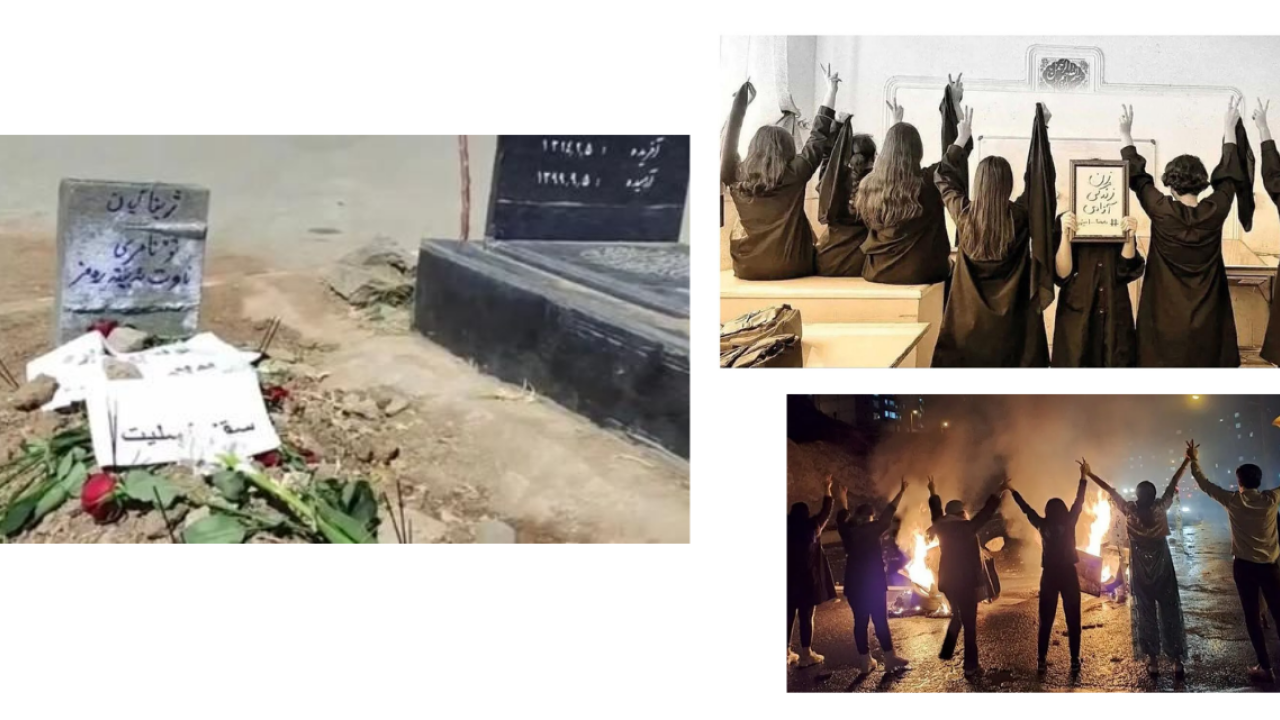
Left: This is the grave of Jina (Mahsa) Amini in Saqqez, whose death at the hands of the “Morality Police” in September 2022 sparked the Woman, Life, Freedom uprising in Iran. The widely circulated inscription on her tomb reads: “Jina, you do not die; your name becomes a symbol” (in Kurdish: Jina, canê tu namiri; navê te dibe sembol). At her funeral on 17 September 2022, women in Saqqez collectively removed their hijabs and chanted “Jin, Jiyan, Azadî” (Woman, Life, Freedom), a slogan rooted in Kurdish feminist resistance that was soon adopted across the country. The collective removal of the hijab by Kurdish women at the funeral marked a significant and transformative moment, not only because it initiated a visible wave of collective unveiling in public space, but also because it articulated the entanglement of gendered violence with the marginalisation of minoritized nations in Iran. Image source: BBC Persian, 2022.
Right above: Schoolgirls in Iran participated in Woman, Life, Freedom protests (2022), removing their hijabs and transforming classrooms and schoolyards into spaces of collective refusal. This marked one of the first major moments in Iran’s protest history in which schools became deeply involved in nationwide demonstrations. Image Source: Morning Star, 2023.
Right below: The image from a street in Tehran shows women removing their hijabs collectively, and burning them as a collective refusal of the Morality Police, compulsory hijab, and the broader system of gendered regulation in Iran. Image Source: BBC, 2022.