
Iran in the Shadow of War: Empire, Hollowed Anti-Imperialism, and the Crisis of Hegemony
everything_is_happening_so_fast_-_merhej.jpg
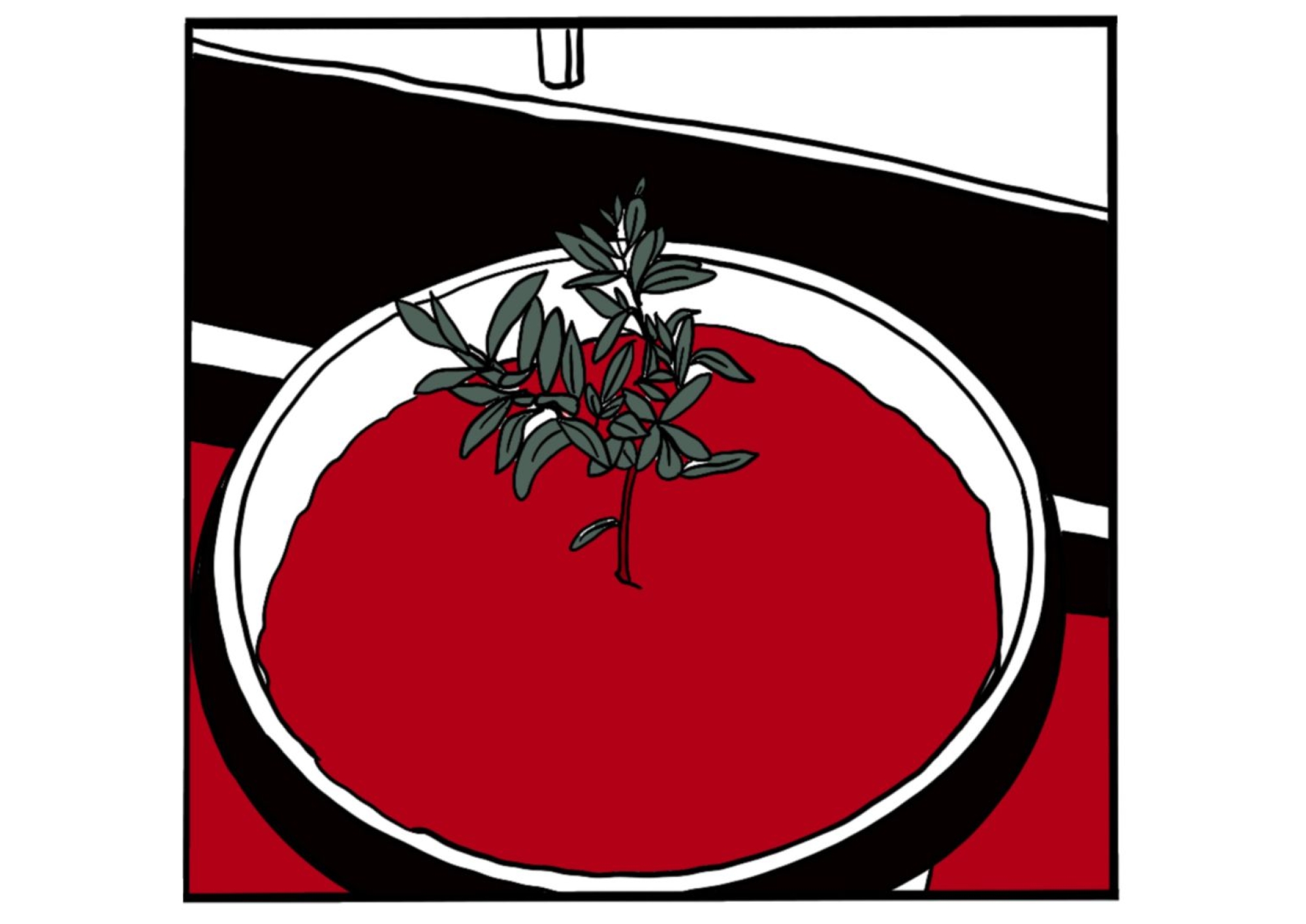
"Everything Is Happening so Fast" by Lena Merhej. Published by Strapazin, Switzerland and Megaphone, Lebanon in 2024.
From Dissent to War: Iran and the Crisis of Imperial Hegemony in a Fracturing Global Order
The protests that emerged across Iran in 2025-26, followed by the rapid escalation into U.S.-Israeli military aggression, were not discrete events but interconnected expressions of a broader structural crisis. They unfolded at the intersection of intensifying domestic economic pressures, regional militarization, and a changing global order marked by growing challenges to U.S. hegemony. Rather than treating the protests and the war as separate phenomena, this article situates them within a shared conjuncture shaped by four decades of U.S.-imposed sanctions, uneven development, and a broader crisis of imperial hegemony that is simultaneously material, geopolitical, and epistemic. The protests were rooted in worsening economic conditions produced by decades of sanctions, inflation, and declining purchasing power. By late 2025, Iran’s annual inflation rate had exceeded 45 percent, with food inflation in some sectors surpassing 60 percent (Ketabi 2025, Trading Economics 2025). The continued devaluation of the rial further eroded living standards for wage earners, pensioners, and small merchants, making economic fragility both widespread and socially visible.
These pressures were not abstract; they were inscribed in everyday social life. Bazaar strikes in Tehran, Tabriz, and Isfahan, particularly across the gold, textile, and import sectors marked a critical turning point. They signaled disillusionment not only among workers but also within segments of the traditional commercial classes historically aligned with the state. Yet, to read these dynamics solely through the lens of domestic crisis is to miss their structural determination: they unfold within a global order in which imperial power continues to shape the conditions of possibility for both dissent and war. The United States and “Israel” pursued strategies of destabilization consistent with long-standing regime-change agendas. When such efforts failed to generate decisive internal rupture, escalation followed. The transition to a U.S.-Israeli war in February 2026 sought to capitalize on perceived internal precarity. In the absence of clear evidence of an imminent armed attack, a growing body of legal scholarship has raised serious questions regarding the compatibility of such strikes with international law (Gray 2018; Akande and Tzanakopoulos 2024).
At the same time, this war has encountered a more visible crisis of legitimacy within the imperial core than earlier interventions in the early twenty-first century. Evidence points to an emergent crisis of consent in the U.S. (Ipsos 2026). Mainstream media have historically played a central role in producing this consent, framing military intervention as necessary, defensive, or humanitarian. Such narratives were critical in legitimizing U.S.-led interventions in Afghanistan, Iraq, Libya, and Syria, as well as broader imperial engagements across Latin America. The erosion of this support is not merely ideological but materially grounded. Rising fuel costs, persistent inflation, and widening economic instability have rendered the costs of empire increasingly visible to working populations. The proliferation of alternative media and the global circulation of images from Gaza since 2023 have disrupted hegemonic narratives that once framed the “Middle East” as a space requiring Western “liberation” (Said 1978). As Antonio Gramsci reminds us, domination is secured not only through coercion but through hegemony, and the active organization of consent within civil society (1971). Concurrently, the ideological apparatus that has historically sustained imperial intervention shows signs of fracture, as the contradiction between popular sacrifice and elite accumulation is less easily obscured.
The present conjuncture is best understood through the lens of imperialism as theorized by Vladimir Lenin, who conceptualized it as the “highest stage of capitalism,” marked by the fusion of capital accumulation and geopolitical domination (1917). From this perspective, Iran’s position within global energy circuits and its sustained resistance to U.S. hegemony are not incidental but structurally constitutive of its vulnerability within the contemporary imperial order. The discursive repertoire through which imperial interventions are justified, and invocations of “democracy,” “security,” and “liberation,” must therefore be understood not as neutral descriptors but as forms of ideological mediation that obscure underlying relations of power. The language of intervention naturalizes geopolitical domination while depoliticizing the economic and strategic imperatives that sustain it, thereby reproducing imperial hegemony at both material and symbolic levels.
The crisis of consent surrounding the war must also be understood as an epistemic crisis. If, as Lenin argues, imperialism rests upon the fusion of economic and geopolitical domination, and if, as Gramsci demonstrates, such domination requires the organization of consent, then the production of knowledge becomes central to the reproduction of imperial power. As Edward Said shows, representations of the “Orient” have long functioned as a key mechanism through which domination is normalized and legitimized (Said 1978). Contemporary portrayals of Iran frequently reproduce these logics, reducing complex social and political formations to cultural caricatures while obscuring the historical and material conditions that shape them. Yet, the proliferation of alternative media and counter-narratives has increasingly challenged these representations, disrupting the possibility of a singular imperial account. The present crisis of empire, therefore, is not only material and geopolitical but also epistemic: the narratives through which intervention has historically been justified are losing their capacity to secure unquestioned legitimacy.
Revolution and Containment: The Cold War Making of Peripheral Capitalism in Iran
The 1979 Iranian Revolution stands as one of the most significant anti-imperial uprisings of the twentieth century. It emerged from a social formation structured by oil dependency, authoritarian modernization, and accelerated secularization under the Pahlavi monarchy (Abrahamian 1982). Yet, the collapse of Mohammad Reza Shah’s regime cannot be understood as purely endogenous; it unfolded within a shifting global conjuncture in which external powers recalibrated their strategic interests. Western disengagement from the Pahlavi monarchy, followed by the rapid accommodation of an Islamist outcome, did not reflect ideological affinity but Cold War geopolitical reasoning. In the high stakes context of the Cold War, an Islamist polity appeared legible, containable, preferable, even, to the unpredictable radicalism of a broad-based leftist movement that might disrupt access to oil and unsettle regional order (Keddie 2006; Katouzian 2009). Political Islam must therefore be understood not as an organic inevitability, but as partially enabled within a wider strategic architecture. Often described as the “Green Belt” approach, U.S. policy repeatedly positioned religiously grounded movements as buffers against socialist and nationalist currents (Halliday 2005; Esposito and Voll 1996). What later came to be framed as the “rise” of “political Islam” was, in significant measure, the outcome of a profound imperial miscalculation.
This calculus rested on a deeply flawed assumption: that religious forces were inherently more governable, ideologically bounded, and more compatible with imperial interests than their secular, nationalist, feminist, socialist, or Marxist counterparts. In a country bordering the Soviet Union and occupying a critical position within global energy circuits, such reasoning appeared, at the time, pragmatic (Wright 2010). In hindsight, however, it reveals the limits of imperial knowledge, itself an attempt to impose strategic coherence on a complex social formation through reductive binaries. What was imagined as a stabilizing solution became, over time, a site of enduring contradiction exposing how the pursuit of geopolitical manageability, rooted in an outdated desire for homogeneity, generated precisely the forms of instability it sought to contain.
This conjuncture did not merely shape the outcome of the revolution; it structured the very form of the post-revolutionary state. The rupture of 1979 was articulated through a powerful language of anti-imperialism, promises of sovereignty, redistribution, and popular emancipation. But it unfolded within a global order already structured by imperial constraint. What followed, then, was not the realization of a transformative anti-imperialist project, but its containment and reconfiguration. State power was rearticulated in a form compatible with the ongoing reproduction of peripheral capitalism, even as it continued to speak in the idiom of resistance. In this sense, anti-imperialism did not disappear; it was hollowed out. The slogans that once unified different revolutionary factions were retained, but their material content was progressively eroded, transformed into a legitimating discourse rather than a program of structural change. What had functioned as a language of resistance became, over time, a language of rule, mobilized to secure consent, manage dissent, and stabilize a social order increasingly marked by contradiction.
For many families in Iran, including my own, this history is not an abstraction but a lived and transmitted experience. My father’s imprisonment and torture by SAVAK (the Bureau for Intelligence and Security of the State) for his political activism is not just a personal testimony, but a statement of sociological location – one that situates the analysis within the embodied lived realities of revolutionary struggle. Such positioning underscores that revolutions do not conclude with institutional transformation; rather, they persist as sedimented layers of memory, expectation, and disillusionment that continue to shape political consciousness across generations. As Frantz Fanon argues, the aftermath of anti-colonial struggle is defined as much by deferred promises and unresolved contradictions as by the achievement of formal independence (1963). I therefore write this article from a standpoint shaped by Western academic training while remaining embedded in these historical lived realities: a trajectory in which a revolution that once articulated demands for dignity, sovereignty, and redistribution ultimately gave way to the consolidation of a more disciplined and enduring form of peripheral capitalism.
Iran in the World System: Hollowed Anti-Imperialism and Peripheral Capitalism
Post-revolutionary Iran occupies a semi-peripheral position within the capitalist world system, shaped by structural constraints that simultaneously limit and channel state capacity (Wallerstein 1974; Amin 1976). Its sovereignty has been consistently circumscribed by external pressures, U.S. and European sanctions, financial exclusion from global markets, and the global dependence on oil rents. But these constraints alone do not determine its developmental trajectory. Instead, Iran’s position reflects a historically specific configuration of peripheral capitalism in which both external coercion and internal governance dynamics shape the reproduction of state power.
Iran’s oil sector continues to furnish a substantial share of state revenue, even under sanctions, underscoring the persistence of an economy anchored in extractive rents. Yet, accumulation extends well beyond hydrocarbons. Strategic sectors, including petrochemicals, construction, telecommunications, finance, and logistics, have increasingly come under the control of parastatal organizations and security-linked conglomerates, concentrating economic power within networks tied to political authority. Among the most significant of these institutions are the bonyads, charitable foundations established after the 1979 revolution to provide welfare, support veterans, and assist the families of martyrs. While they continue to perform important redistributive functions, many have become major economic actors with extensive holdings across multiple sectors. Occupying a position between state institutions and private capital, the bonyads exemplify a central feature of Iran’s post-revolutionary political economy: the fusion of welfare provision, political authority, and capital accumulation.
This arrangement produces a distinctive institutional duality. The bonyads derive legitimacy from revolutionary commitments to social justice and redistribution, yet their expanding economic role ties them to processes of accumulation and resource concentration. The result is a political economy in which redistributive discourse remains central to state legitimacy while economic authority becomes increasingly concentrated within semi-autonomous institutions operating at the intersection of welfare, political power, and capital accumulation. Revolutionary ideals of social justice thus persist, but increasingly as a source of legitimacy for a system that simultaneously reproduces new forms of inequality and hierarchy.
The labor unrest of 2022-2025 provides a revealing aperture onto the structural contradictions of Iran’s semi-peripheral formation. Waves of coordinated strikes among oil workers in Khuzestan, teachers across multiple provinces, and steelworkers in Ahvaz made visible a widening disjuncture between the imperatives of state-led accumulation and the lived realities of working populations (International Trade Union Confederation 2025). These were not episodic disruptions but symptomatic expressions of a deeper reconfiguration of class relations and the organization of production. What emerges is a pattern characteristic of peripheral and semi-peripheral states operating within the constraints of global capitalism: the need to sustain extraction, fiscal stability, and geopolitical resilience while confronting intensifying social demands from below. In this context, labor unrest marks the erosion of the social contract through which consent is organized. The persistence and diffusion of these struggles thus point to an increasingly fragile alignment between accumulation and legitimacy, as the state’s capacity to mediate between global pressures and domestic expectations comes under mounting strain.
Importantly, the interplay between external pressures and internal authoritarianism is not antagonistic but mutually reinforcing. The dual logic of managing dissent and maintaining strategic autonomy produces a specific configuration of authoritarian peripheral capitalism, in which anti-imperialist rhetoric and nationalist discourse coexist with structural inequality and concentrated economic power. In this sense, post-revolutionary Iran exemplifies a form of hollowed anti-imperialism: one in which sovereignty and ideological independence are rhetorically asserted even as material and social hierarchies remain largely intact. The Iranian case thus challenges conventional accounts of post-revolutionary development. Anti-imperial rhetoric alone does not guarantee emancipatory outcomes; rather, the persistence of semi-peripheral structural constraints shapes the possibilities of redistribution, social mobilization, and political contestation. Labor unrest, parastatal accumulation, and state-sanctioned authoritarianism are not aberrations; they are intrinsic to the reproduction of this political economy.
Political Islam, Passive Revolution, and the Crisis of Moral Hegemony
The 1979 revolutionary mobilization drew upon Shi’i political theology as a potent moral and symbolic repertoire of resistance, grounded in the ethics of martyrdom, justice, and social accountability (Arjomand 1988; Dabashi 2007). These symbolic resources functioned as a unifying framework across diverse social groups and political currents, enabling the articulation of opposition to both domestic authoritarianism and foreign domination. In this sense, Shi’i political discourse operated not merely as religious expression but as a form of political mediation through which claims to sovereignty, dignity, and social justice were collectively constructed and made legible within a revolutionary field.
Revolutions are shaped not only by aspiration but also by organizational capacity. Under the Pahlavi monarchy, sustained repression systematically weakened secular parties, labor unions, women’s organizations, and leftist movements, undermining their ability to develop durable institutional infrastructures. By contrast, clerical networks retained comparatively resilient organizational forms embedded in mosques, seminaries, and charitable foundations, which facilitated sustained coordination and the reproduction of political authority across social space. In the aftermath of the fall of the Shah, the absence of similarly consolidated institutions among democratizing forces limited their capacity to translate revolutionary mobilization into durable political power. This asymmetry between ideological plurality and organizational capacity was therefore decisive in shaping the trajectory of the post-revolutionary state.
It is precisely this asymmetry that helps explain the subsequent closure of the revolutionary field. As clerical institutions consolidated their organizational advantage, the initially plural and contested revolutionary discourse was progressively institutionalized and monopolized by a clerical-bureaucratic elite, narrowing the boundaries of legitimate political expression. From a Weberian perspective, this trajectory can be understood as a process of routinization, in which the dispersed revolutionary charisma of 1979 was gradually stabilized and absorbed into enduring structures of domination (1978). Drawing on Gramsci’s concept of passive revolution, the Iranian trajectory can be understood as a process in which revolutionary rupture was institutionalized without fundamentally transforming underlying relations of power (Gramsci 1971). The doctrine of Guardianship of the Jurist (Velayat-e Faqih) provided the central mechanism through which revolutionary energies were absorbed into a codified system of authority, anchored in institutional hierarchies and bureaucratic procedures, enabling the state to claim custodianship over “authentic” Islam and resistance while narrowing the boundaries of legitimate political action. Labor, feminist, and leftist alternatives were frequently marginalized as foreign or ideologically suspect (Bourdieu 1991).
This hegemonic formation developed under conditions of sustained sanctions, external pressure, and geopolitical confrontation, allowing the state to frame diverse forms of dissent through the language of national security and foreign threat. Yet, its legitimacy has increasingly eroded. As Gramsci reminds us, hegemony depends upon a correspondence between moral authority and lived social realities. In contemporary Iran, persistent inflation, economic precarity, and widening inequality have weakened that correspondence, generating a growing crisis of legitimacy as the promises of the revolution become increasingly difficult to reconcile with everyday experience (Weber 1978).
The state’s symbolic power has not disappeared, but it has become fractured and unevenly sustained. Once widely shared idioms of martyrdom, justice, and ethical governance now coexist with skepticism, irony, and forms of quiet refusal. Revolutionary discourse, once a vehicle of cross-class solidarity and political integration, has given way to resistance – one that is not only expressed through overt opposition but also through withdrawal, hesitation, and the gradual thinning of belief itself. These dynamics illuminate the structural contradictions of hollowed anti-imperialism, in which the persistence of ideological sovereignty masks the absence of substantive emancipation.
The 2025-26 Uprising: Semiotic Rupture and Structural Constraint
The protests initially emerged from acute economic grievances (bazaar strikes, wage disputes, and the escalating cost of living) but rapidly exceeded these immediate triggers. In major urban centers such as Tehran, Shiraz, Mashhad, and Sanandaj, localized demonstrations expanded into a broader, cross-sectoral uprising, drawing in teachers, pensioners, students, and small merchants. This diffusion across social groups signals not merely the intensification of material hardship, but a widening crisis of social reproduction and state legitimacy. The movement, therefore, cannot be reduced to economic discontent alone. It also represents a profound semiotic rupture: a collective refusal to accept the state’s symbolic claims to authority. Discourses that once anchored legitimacy, religion, martyrdom, and anti-imperialism no longer operate as self-evident or uncontested sources of consent. Instead, their meanings have become destabilized, revealing the erosion of the ideological frameworks through which the state has historically secured hegemony.
Foreign actors sought to instrumentalize unrest for regime change, while the state counter-framed dissent as externally orchestrated, thereby delegitimizing opposition. This dual dynamic did not invalidate the material basis of popular grievances; rather, it constrained the terms through which dissent could be articulated and recognized. As efforts at externally supported destabilization failed to produce regime transformation, the conflict escalated into a full military confrontation by “Israel” and the U.S. Western analyses continue to underestimate the enduring sociological force of Shi’i political culture and its constitutive entanglement with Iranian nationalism. Faced with external aggression, large segments of the population, both within Iran and across the diaspora, mobilized in defense of national sovereignty, even as they continued to contest the state domestically. This conjuncture reveals not a simple consolidation of regime legitimacy, but a more complex configuration in which opposition to internal authority can coexist with collective resistance to external domination.
This conjuncture reveals a central contradiction: even as the state’s domestic legitimacy has weakened, external aggression can still activate powerful traditions of anti-imperialist identification and national solidarity. The events of 2025-26 suggest that the revolutionary ideals of freedom (azadi) and independence (esteghlal) remain potent political reference points within Iranian society, even where their institutional realization remains contested. This dynamic reflects the enduring force of a historically-rooted Iranian political subjectivity that cannot be adequately captured through dominant Western frameworks, as these presume a straightforward opposition between society and state. Under conditions of external threat, these traditions can be reactivated in ways that complicate conventional assumptions about legitimacy, dissent, and political allegiance. As a result, imperial intervention often strengthens rather than weakens authoritarian rule by enabling the state to rearticulate sovereignty, resistance, and collective defense through narratives that resonate with broader historical memories of foreign domination.
Palestine and the Fragmentation of Solidarity
Palestine remains central to the Islamic Republic’s anti-imperialist narrative. Since 1979, it has functioned as a constitutive element of the state’s moral and ideological architecture – a symbolic site through which claims to justice, resistance, and Islamic “authenticity” are articulated. In Gramscian terms, Palestine serves as a moral anchor that links state authority to a broader ethical and political horizon. Yet, the conditions of internal crisis (rising inflation, unemployment, and declining purchasing power) rendered Palestine a contested signifier within Iranian society. When invoked by the state to justify domestic repression or to deflect attention from internal inequalities, it risked generating a zero-sum tension between transnational solidarity and local survival. Among workers, youth, and urban middle classes, the question was no longer simply whether Palestine matters, but how it was mobilized and at what social and material cost. Consequently, the state’s invocation of Palestine produced both consent and skepticism, revealing the limits of moral-political narratives in sustaining durable hegemony when they collide with lived economic and social realities.
At the same time, this tension must be understood within a broader field of representation structured by global power. As Edward Said (1978) demonstrates, knowledge production about the “Middle East” has historically served imperial interests, often flattening distinct struggles into generic, interchangeable symbols. Within dominant Western discourse, Iran’s support for Palestine is frequently reduced to a strategic or cynical calculation, obscuring the historical, ethical, and affective dimensions through which solidarity is lived and contested. This misrecognition is not incidental; it constitutes an epistemic mechanism of empire, shaping both perception and policy. Yet, the war has reconfigured these representational dynamics in significant ways. For many Iranians, the experience of direct external aggression has repositioned Palestine not as an abstract geopolitical concern, but as part of a shared condition of vulnerability under imperial violence. What had, for some, become distant, instrumentalized, or symbolic is now immediate, and affectively felt. Images of destruction, displacement, and siege resonate through the lens of potential or actual domestic precarity, rendering the distant intimate. In this sense, the war has partially restored solidarities that years of sanctions, austerity, and economic hardship had strained, highlighting the interplay between local experience and transnational ethical-political identification.
This reconfiguration is neither total nor uncontested, and it does not resolve the deeper contradictions between state discourse and lived experience. Rather, it exposes the instability of hegemonic claims and the contingent nature of political solidarity. In this context, solidarity is not a fixed or pre-given category; it is continuously shaped and reshaped by shifting material conditions, social struggles, and geopolitical pressures. Simultaneously, this dynamic reflects a recurring historical pattern: foreign intervention often consolidates internal cohesion, even amidst profound domestic divisions. Confronted with external threats, populations frequently reprioritize political commitments, emphasizing sovereignty and collective defense over internal contestation. Such realignments do not erase conflict, but they reorganize it around a common foreign adversary, a phenomenon that imperial powers have consistently underestimated. In Iran, as in other Global South contexts, external aggression can paradoxically reinforce the very state structures it intends to weaken. Fragmentation within society, while present, remains fluid and contingent, particularly under conditions of acute external pressure. The Iranian case demonstrates that internal dissatisfaction and external mobilization are constitutive features of a society forged through revolution and situated within a global imperial order. Within this configuration, Palestine becomes more than a foreign policy concern: it emerges as a contested terrain in which the meaning of anti-imperialism and the interests it serves are continually negotiated and disputed.
For these reasons, the question of Palestine is constitutive of the present conjuncture; it exposes both the limits of state-centered anti-imperialism and the contradictions through which such frameworks are reproduced. While states may instrumentalize the Palestinian cause as a source of ideological legitimacy, this appropriation reveals the fragility of anti-imperialism when it is detached from substantive emancipatory practice. At the same time, Palestine illuminates the conditions under which alternative forms of solidarity can emerge, particularly from below, where identification is grounded less in state discourse than in shared experiences of dispossession, domination, and resistance. The analytical task, therefore, is not simply to assess whether solidarity with Palestine endures, but to examine how it is continuously rearticulated across multiple sites by states, by imperial powers, and, crucially, through subaltern political practices that challenge and exceed both.
Reclaiming Anti-Imperialism from Below: Agency, Hegemony, and Popular Struggle
This article has argued that analyzing Iran requires moving beyond frameworks that treat empire and the Global South as analytically discrete or inherently oppositional. The Iranian case demonstrates how authoritarian forms of peripheral capitalism emerge through the partial institutionalization and subsequent hollowing of anti-imperialist projects. Simultaneously, imperial power is increasingly unstable: its capacity to secure consent, project legitimacy, and maintain coherent ideological authority is eroding. The outcome is not the collapse of either system, but their simultaneous destabilization, revealing the structural limits of both post-revolutionary authoritarianism and global imperial order.
Iran’s trajectory further illustrates that anti-imperialism can endure as a symbolic and discursive force even after its material and redistributive content has been progressively hollowed out. Practices and ideals that once articulated visions of dignity, social justice, and collective emancipation can, over time, be co-opted and absorbed into the very institutional structures they initially sought to contest. The current conjuncture thus reveals a dual, mutually constitutive crisis: a crisis of hegemony within Iran, in which ideological legitimacy increasingly diverges from material conditions, and a crisis within the imperial system confronting it, characterized by declining consent, strained alliances, and epistemic instability. These dynamics are inseparable, unfolding within a shared global field of power and shaping one another in real time.
Within this conjuncture, the mass mobilization of Iranians in response to external aggression was both unprecedented and analytically underappreciated. Dominant Western analyses, whether from internal observers or external experts, consistently underestimated the scale, intensity, and sociopolitical significance of public solidarity. Millions rallied to support their homeland despite persistent grievances with the Islamic Republic, while members of the diaspora returned to participate, defying conventional expectations that populations flee conflict zones. This mobilization does not signify support for state authority; rather, it reflects a deeply rooted commitment to the enduring ideals of the 1979 revolution: freedom (azadi), anti-imperialism, and social dignity (esteghlal). Revolutionary consciousness, in this sense, remains neither dormant nor monolithic; it is historically embedded, socially adaptive, and strategically mobilized in response to external pressure. Even as citizens demand improved economic conditions, expanded civic freedoms, and greater political accountability, their collective actions reveal that revolutionary and anti-imperialist ideologies continue to shape political subjectivity, forging solidarities that traverse class, generational, and geographic divides. In effect, these mobilizations illuminate the persistence of political agency and ethical consciousness within Iranian society, demonstrating how revolutionary memory and nationalism coalesce to mediate the intersection of internal dissent and external threat.
In this context, Iranian resistance resonates far beyond its borders, activating networks of solidarity even within the U.S. popular struggle against empire. Popular resistance is not confined to the Global South; it can reverberate through the very centers of imperial power, revealing the limits of hegemonic authority when confronted with organized, ethically grounded collective action. This is not a contradiction to be resolved, but a condition to be understood. It reflects what Antonio Gramsci identifies as a crisis of hegemony: a moment in which existing ideological formations no longer fully secure consent, yet alternative projects have not consolidated (Gramsci 1971). Political identities, in such moments, become fluid, contested, and often contradictory. Iranian society today embodies this tension: a population capable of simultaneously contesting state power and mobilizing against imperial intervention, asserting agency in multiple, sometimes paradoxical forms.
The central question, therefore, is not whether anti-imperialism survives, but in what form. This article demonstrates that anti-imperialism cannot be analytically reduced to state discourse or geopolitical alignment. It is a contested terrain, one that can be appropriated, hollowed out, and rearticulated across scales of power. Geopolitics is too often narrated from the vantage point of states, elites, or external observers. Anti-imperialism, to retain emancipatory meaning, must be grounded not in the symbolic authority of states, but in the lived struggles of those who bear the costs of both empire and its domestic intermediaries. Such a project demands redistribution, the reconstruction of autonomous social movements, and the rejection of false binaries between sovereignty and freedom.
It is precisely here that voices situated within these histories become indispensable. Populations are not passive objects of empire or state power, but active agents navigating, resisting, and reconfiguring both. They challenge the epistemic hierarchies long-structuring knowledge production about the Global South and open space for historically grounded understandings of political life. The Iranian people are reclaiming this reality after forty-seven years of revolution, not in a singular or unified way, but through fragmented, contested, and evolving forms of political practice. Their mobilization demonstrates the enduring power of revolutionary ideals, the capacity for cross-border solidarity, and the ability to challenge both imperial intervention and domestic constraints. The outcome remains uncertain, but the stakes are clear: anti-imperialism will either remain a hollowed discourse or be remade from below, rooted in the agency, courage, and collective imagination of ordinary people. In the case of Iran, it is very much in the making.
Abrahamian, Ervand. 1982. Iran Between Two Revolutions. Princeton, NJ: Princeton University Press.
Amin, Samir. 1976. Unequal Development. New York: Monthly Review Press.
Arjomand, Said Amir. 1988. The Turban for the Crown: The Islamic Revolution in Iran. Oxford: Oxford University Press.
Bourdieu, Pierre. 1991. Language and Symbolic Power. Cambridge, MA: Harvard University Press.
Dabashi, Hamid. 2007. Shiʿism: A Religion of Protest. Cambridge, MA: Harvard University Press.
Esposito, John L., and John O. Voll. 1996. Islam and Democracy. Oxford: Oxford University Press.
Fanon, Frantz. 1963. The Wretched of the Earth. New York: Grove Press.
Gramsci, Antonio. 1971. Selections from the Prison Notebooks. Edited and translated by Quintin Hoare and Geoffrey Nowell-Smith. New York: International Publishers.
Halliday, Fred. 2005. The Middle East in International Relations: Power, Politics and Ideology. Cambridge: Cambridge University Press.
Ipsos. 2026. “More Americans disapprove than approve of U.S. strikes against Iran.” Reuters/Ipsos Iran Airstrike Survey. Paris: Ipsos. https://www.ipsos.com/en-us/more-americans-disapprove-approve-us-strikes-against-iran
Katouzian, Homa. 2009. Iran: Politics, History and Literature. London: Routledge.
Keddie, Nikki R. 2006. Modern Iran: Roots and Results of Revolution. New Haven, CT: Yale University Press.
Ketabi, Parsa. 2025. Inflation, Poverty, and Policy Pathways to Inclusive Growth in Iran. SDG Knowledge Hub. Winnipeg: International Institute for Sustainable Development. https://sdg.iisd.org/commentary/guest-articles/inflation-poverty-and-policy-pathways-to-inclusive-growth-in-iran/
Lenin, Vladimir I. 1917. Imperialism: The Highest Stage of Capitalism. Connecticut: Martino Fine Books, 2021.
Said, Edward W. 1978. Orientalism. New York: Pantheon Books.
Weber, Max. 1978. Economy and Society. Berkeley: University of California Press.
Trading Economics. 2025. Iran Food Inflation, October 2025. Trading Economics. https://tradingeconomics.com/iran/food-inflation